
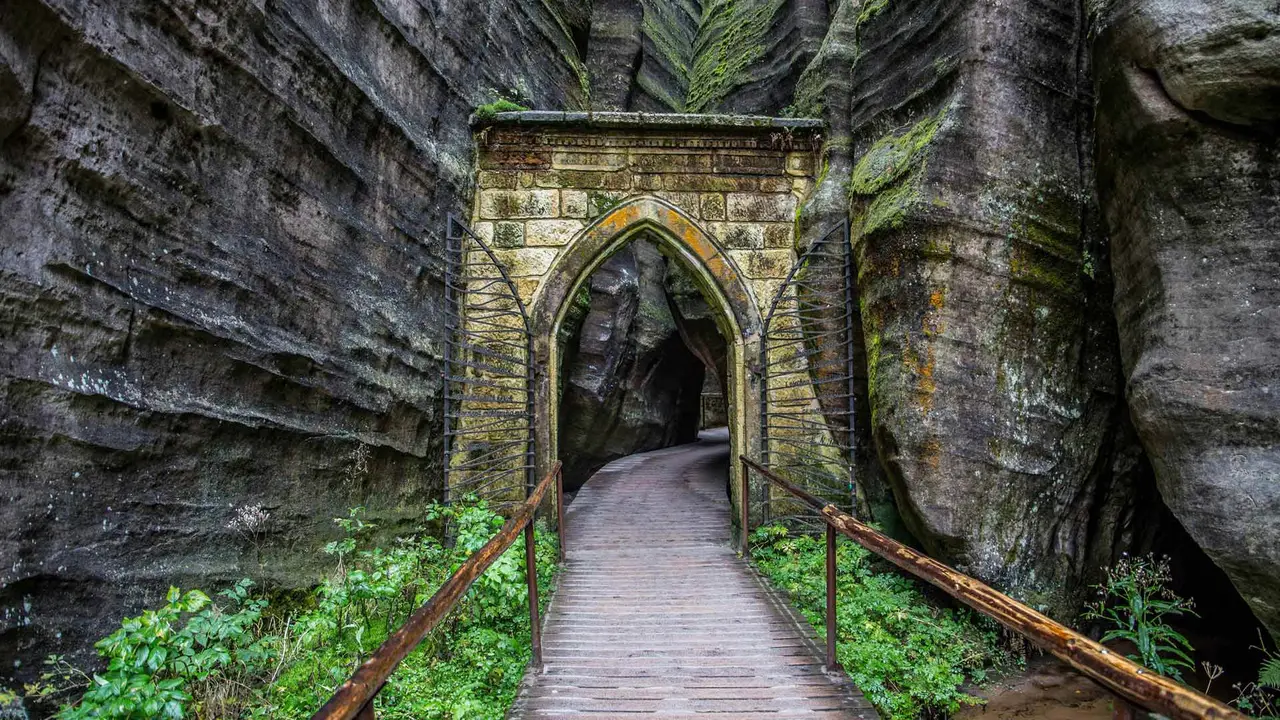
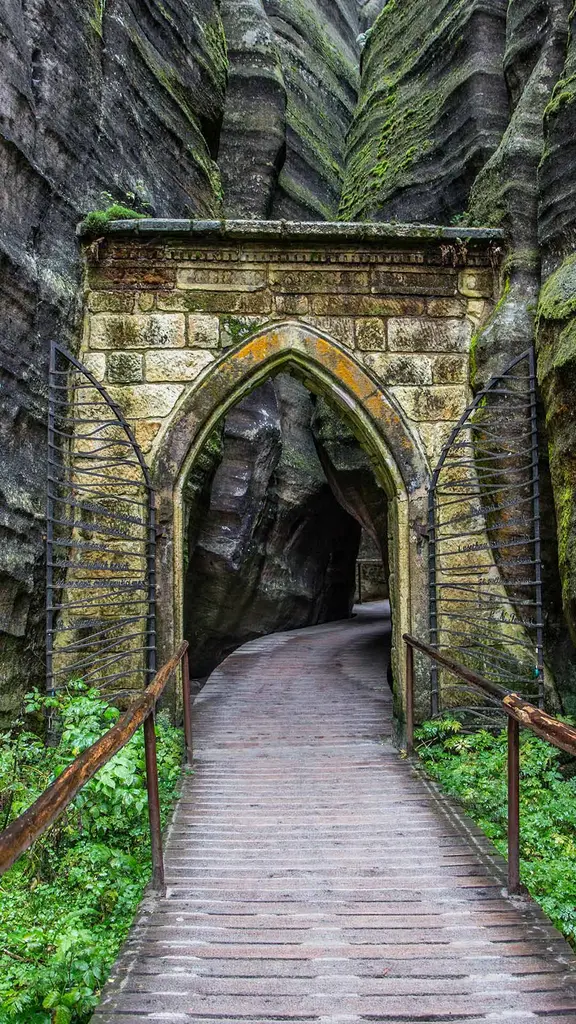
The Gothic Gate in the Adršpach-Teplice Rocks, Czechia (© Kseniya_Milner/Getty Images)
From 18th-century visitors to fire-carved trails, this rock city tells a story of survival. Hidden in Czechia's Hradec Králové Region, the Adršpach–Teplice Rocks form Central Europe's largest sandstone labyrinth. For centuries, the cliffs and passages lay cloaked in forest, until a great fire stripped the land bare. Arches, towers and winding corridors emerged out of the ashes, and the first hiking paths were carved into the rock. Soon after, explorers and poets left their marks with stone inscriptions that captured a destination both wild and enchanting.
Today, the reserve stretches over 13 square kilometres, preserved within the Broumovsko Protected Landscape Area. Among its treasures stands the Gothic Gate, featured here, which was built in 1839. Commissioned by Ludvik Karel Nádherný along with a network of hiking paths, bridges and stairways, this striking archway became the symbolic threshold to the City of Rocks. Much like India's Bhimbetka rock shelters, where ancient stone walls still carry traces of human history, these sandstone labyrinths hold nature and memory together. More than a relic of the past, the Gothic Gate still stands as guardian of the labyrinth, welcoming every visitor who steps into the park.