
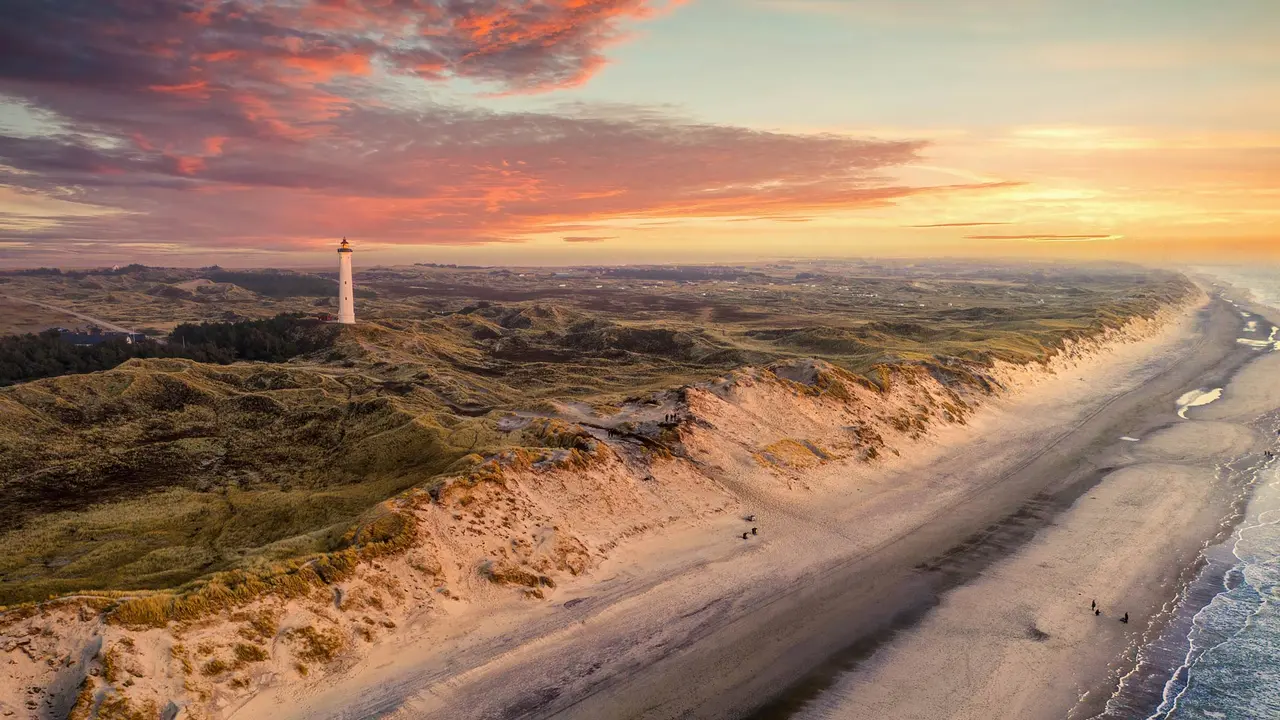
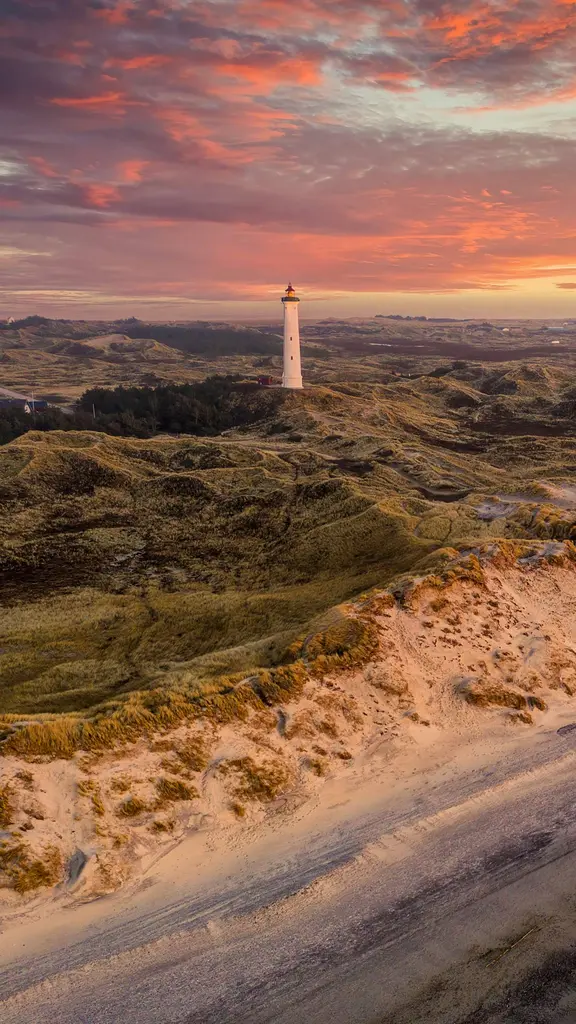
Lyngvig Lighthouse, Hvide Sande, Denmark (© Caroline Brundle Bugge/Getty Images)
Honey bees use a complex 'waggle dance' to communicate the location of food sources to other bees in the hive.
Built to brave storms and steer ships to safety, lighthouses now glow as symbols of heritage, wonder and connection. Standing over 30 metres tall, Lyngvig Lighthouse in Denmark was built in 1906 atop a more- than- 15-metre dune along the west coast of Jutland—the country's westernmost region. Made with a concrete foundation and brick walls, and finished with teak-framed windows and doors, the lighthouse originally required a team of three keepers. They maintained its light until 1965. It has been operating automatically ever since. Following a temporary closure in 2024 due to structural concerns, the lighthouse is now open to the public again.
Thousands of kilometres way, the Mahabalipuram Lighthouse, located in Tamil Nadu, has been guiding ships along the coast for over a century. The first modern light was set up in 1887 on the roof of the ancient Olakkannesvara Temple. The current circular masonry tower, built from natural stone, became fully operational in 1904.