
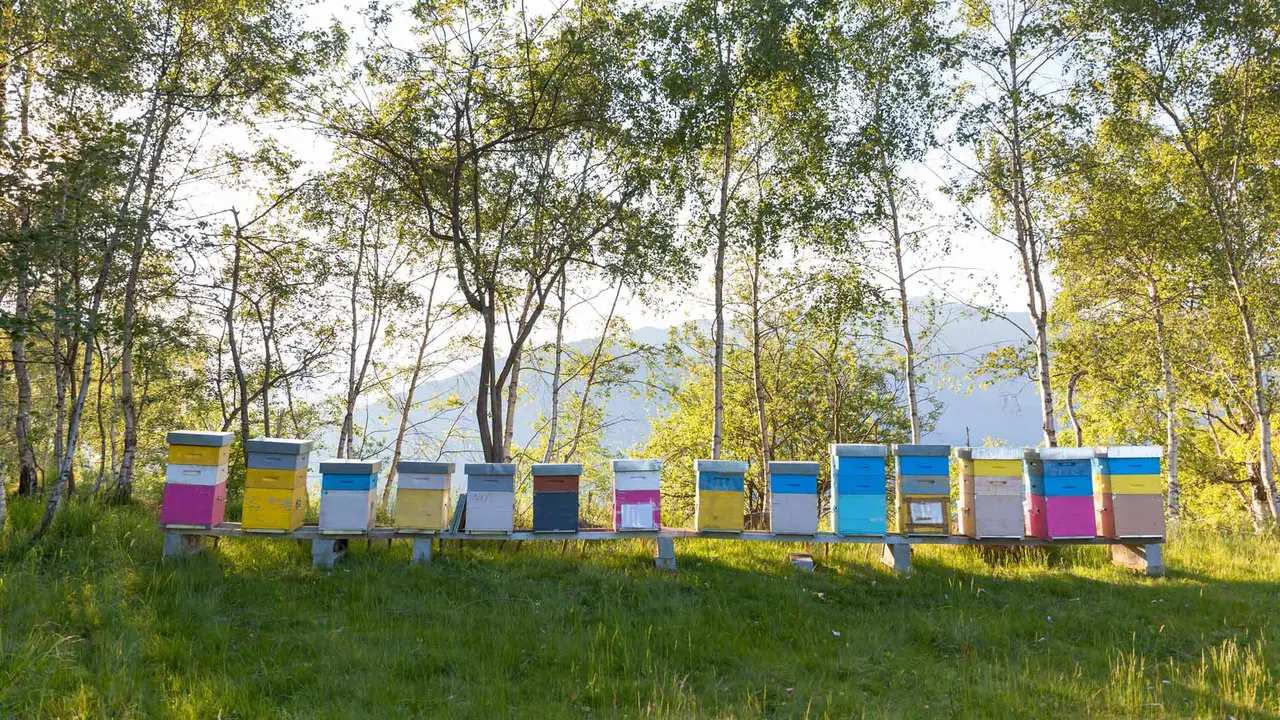

Colourful beehives, Italy (© Roberto Caucino/Shutterstock)
Honey bees use a complex 'waggle dance' to communicate the location of food sources to other bees in the hive.
If you think bees are just out for a sting, think again. These tiny winged workers are running the world's sweetest gig. About 35% of global food crop production relies on animal pollination—and honey bees are among the most important contributors. The value of crops pollinated by bees is estimated at hundreds of billions of dollars each year. But despite their superpowers, bees are in a sticky situation. Today's image shows a row of colourful beehives in Italy. Bees use colour to distinguish between hives, much like humans use house numbers. Blue, yellow, green and red hives help reduce confusion and prevent accidental hive invasions.
Beekeeping has a long history in India, with references in ancient Vedic texts, Buddhist scriptures and Mesolithic rock paintings in Madhya Pradesh. While scientific beekeeping began in the late 19th century, historical records suggest that honeybees were tamed—and even used in warfare—much earlier. After independence, India promoted beekeeping through rural development programmes. Today, five key bee species support the country's honey and beeswax production, continuing a tradition thousands of years old.