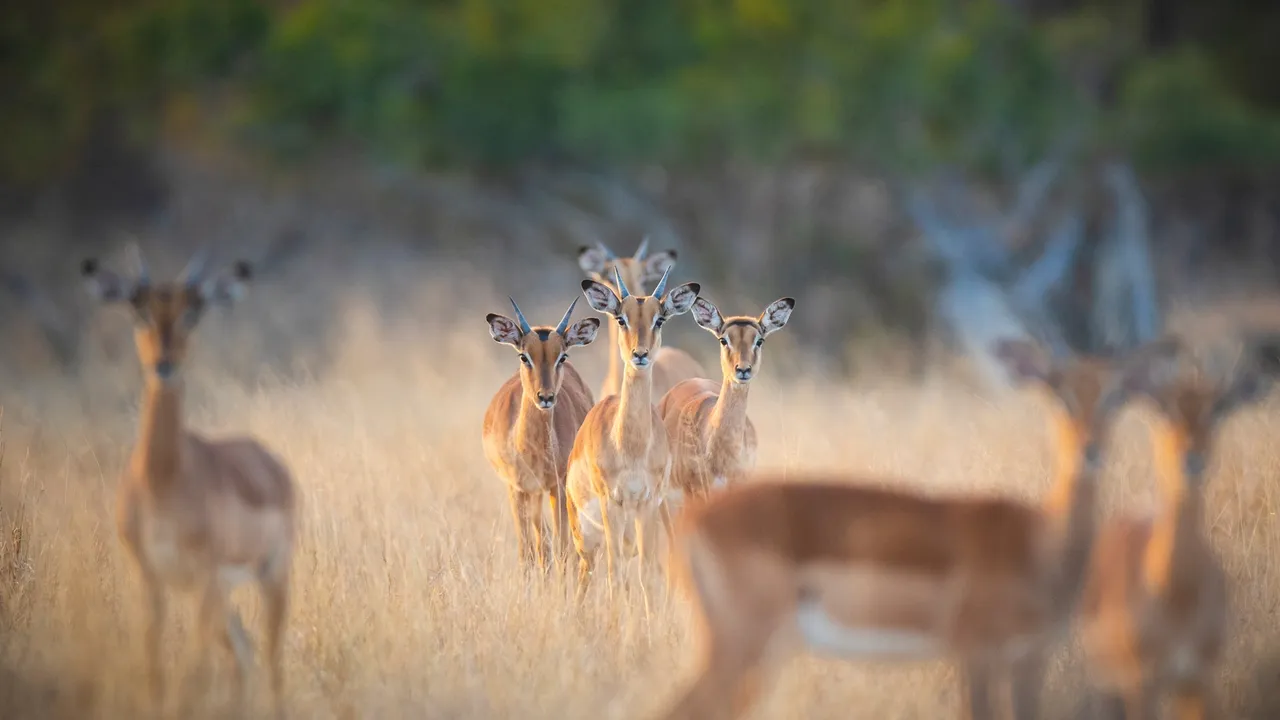
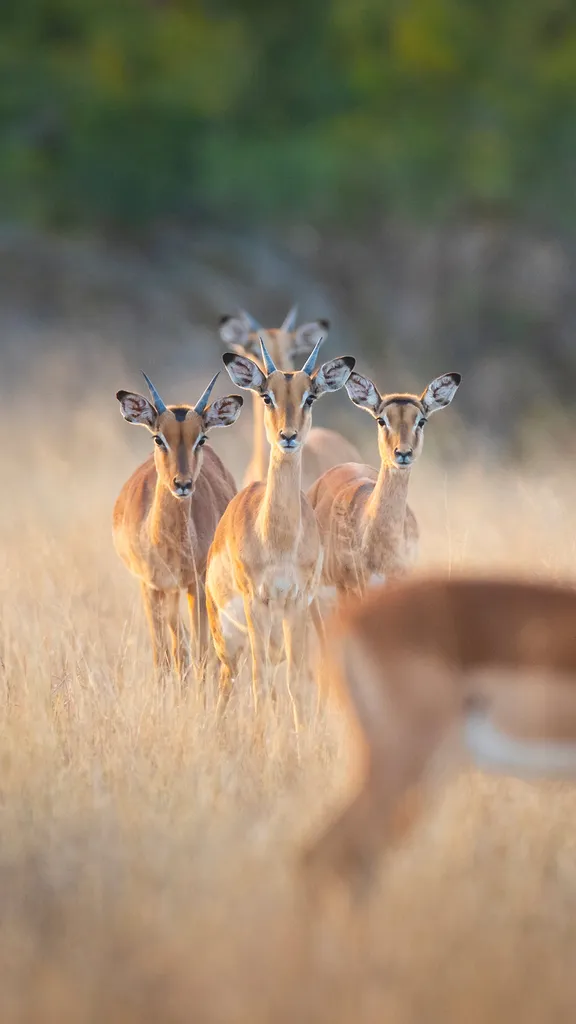
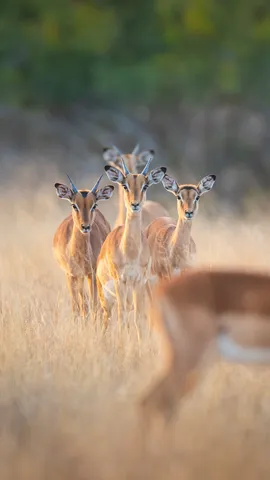
A herd of impalas, Londolozi Game Reserve, South Africa
What stands out about Londolozi Game Reserve in South Africa isn't just the wildlife—it's the long-term commitment behind it. Since 1926, its 58 square miles have supported research and monitored wildlife behavior in their natural habitat. Located within the Sabi Sand Private Game Reserve, it is home to Africa's Big Five. Londolozi is part of a larger open system that connects with Kruger National Park, allowing animals such as elephants, rhinos, lions, leopards, zebras, and many antelope species to move freely without fences holding them back.
Among the species frequently spotted are impalas—always moving, always alert. Their adaptable feeding habits help them shift between flowering plants, acacia pods, forbs, and fruits as the seasons change. Their social structure is just as interesting: females and young gather in herds, while males compete for territories during the breeding season. Most young are born in early summer after a gestation period of six to seven months. Even though they're quick and agile, predators such as leopards, lions, and cheetahs keep them on edge. Drought cycles and habitat pressure add to the challenges, so protected spaces like Londolozi make a meaningful difference in their long-term survival.