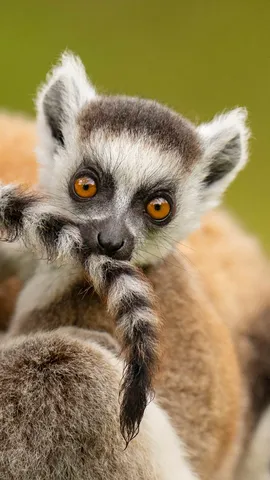
Ring-tailed lemur
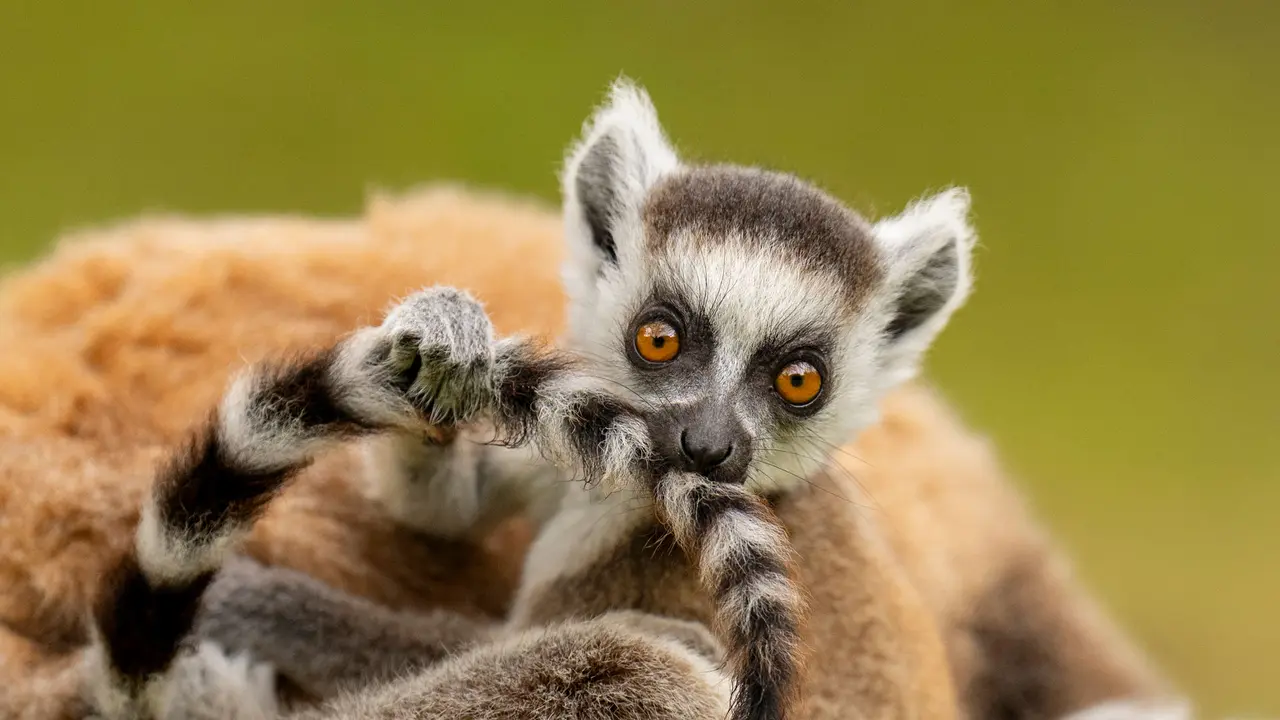
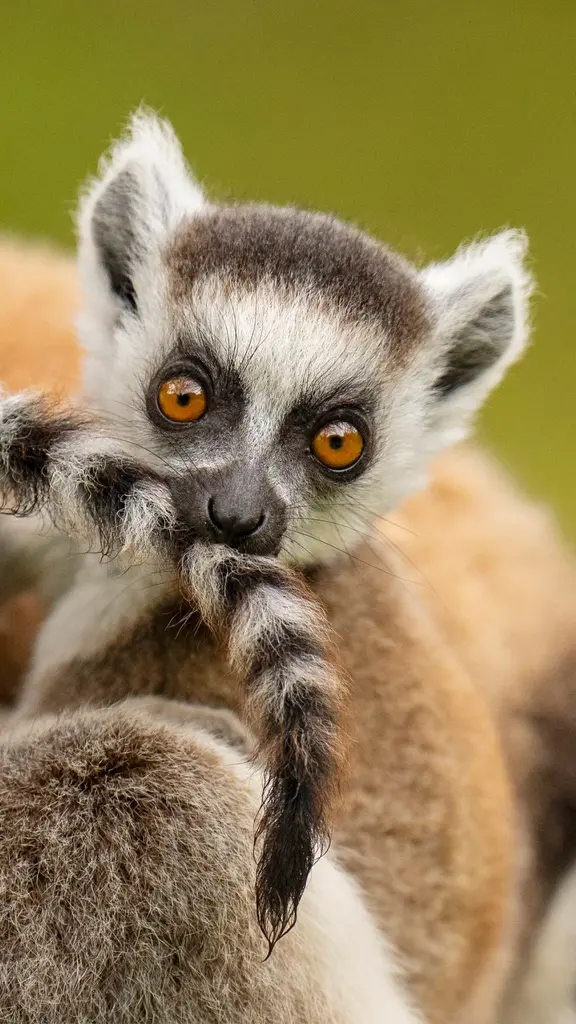
It looks like this small creature is playing a game, right? But when a baby ring-tailed lemur wraps its tail around or gives it a tug, it's actually working on crucial skills. The infants spend their early weeks hanging tight to their mom, first clinging to her belly and later to her back. As they grow, they separate from their mom and tail-chasing becomes part of how they learn balance, coordination and group play. These primates use their long tails for communication as well. Raised like flags during group movement, the tails help them stick together in open terrain. Loud, rhythmic calls, scent markings and 'stink fights' between males add to the social drama. Ring-tailed lemurs are found only in southern and southwestern Madagascar, where they live in dry forests, spiny thickets and rocky outcrops.
It might be hard to imagine, but the distant relatives of lemurs may have once roamed the Kashmir region of India. Despite Madagascar being over 5,000 kilometres away, fossil hunters have uncovered compelling evidence to support this surprising link. After six years of dedicated research, a partial jawbone—just over two centimetres and a quarter long—was discovered in the Ramnagar region of Jammu and Kashmir. It is believed to belong to a primate that shares ancestry with modern-day lemurs.