
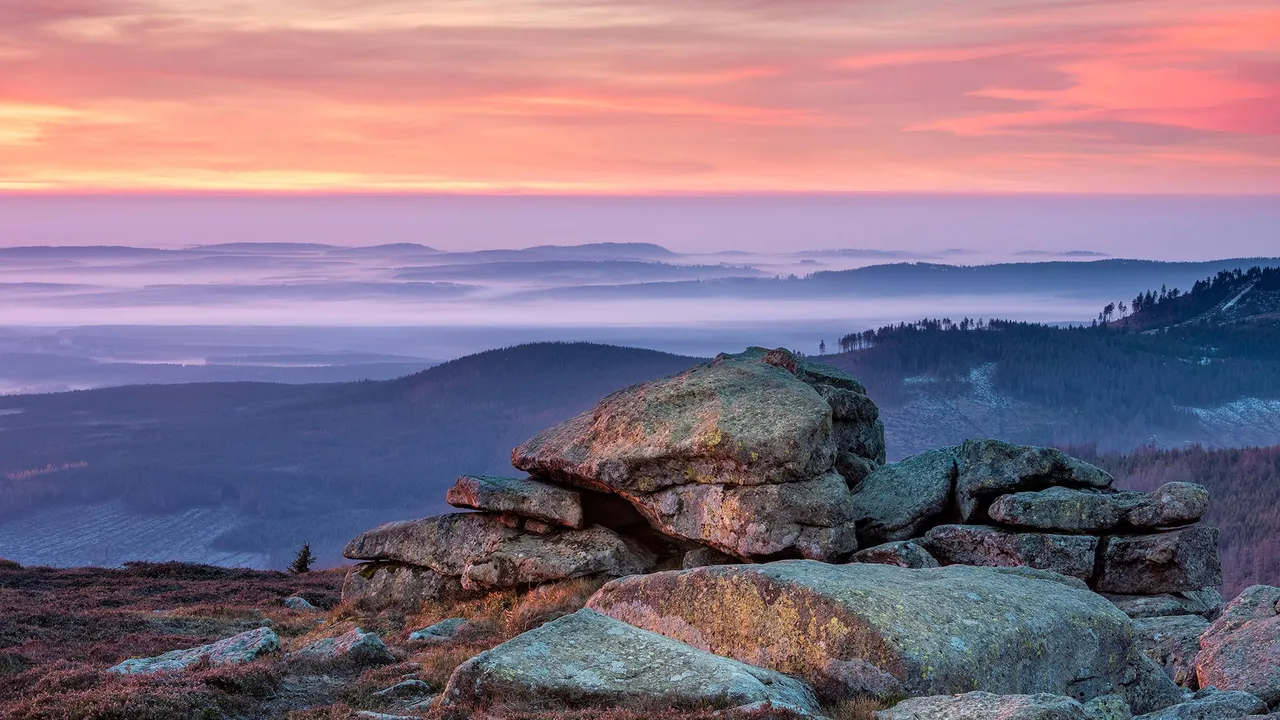
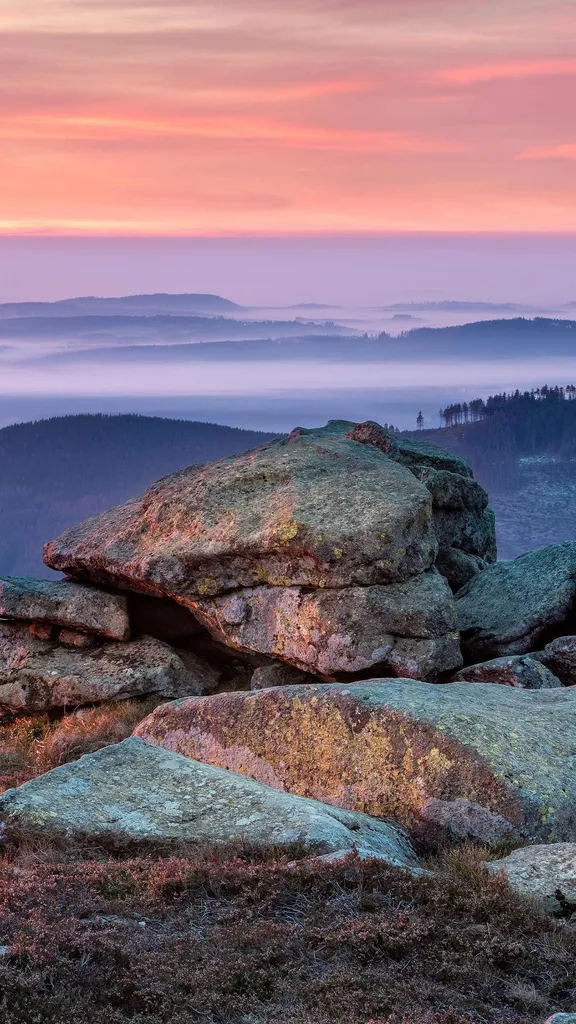
Sunrise on the Brocken, Harz National Park, Germany (© imageBROKER/AVTG/Getty Images)
Imagine reaching the Brocken in Harz National Park, Germany, as clouds slide across the ridge. With the sun behind you, mist ahead—then a giant, haloed shadow forms. Ever wondered why climbers once feared this sight? The phenomenon, called the Brocken spectre, is an eerie natural optical effect that occurs when sunlight projects a person's shadow onto cloud or fog. Rising about 1,141 metres, the Brocken is the highest peak in northern Germany and has long inspired folklore, including tales of witches gathering here during Walpurgis Night.
The mountain later played a very real strategic role. During Germany's division, the summit became a restricted Cold War surveillance site used by East German and Soviet intelligence. After reunification, it reopened and became part of Harz National Park, established jointly in 2006 and covering roughly 247 square kilometres. The park protects spruce forests, upland peat bogs and fast-flowing streams, while conservation programmes have reintroduced species such as the Eurasian lynx. Steam-powered trains still climb the slopes, linking past legend with present-day protection.