
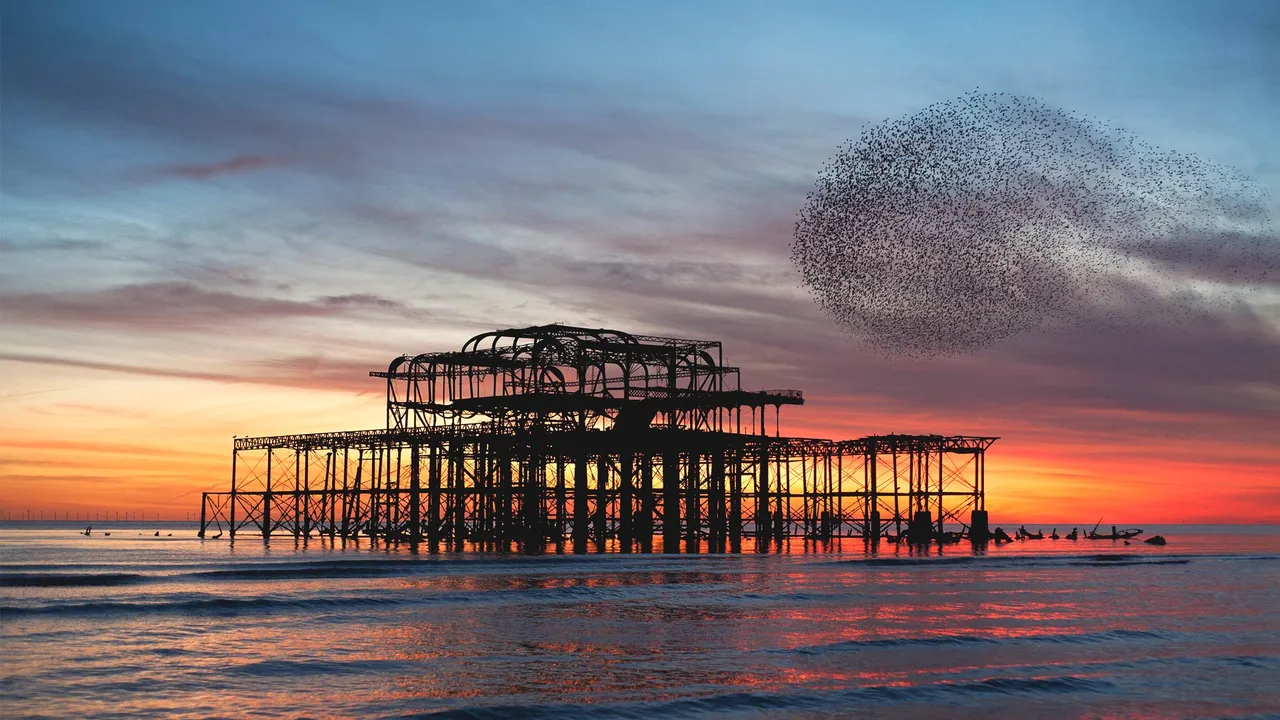
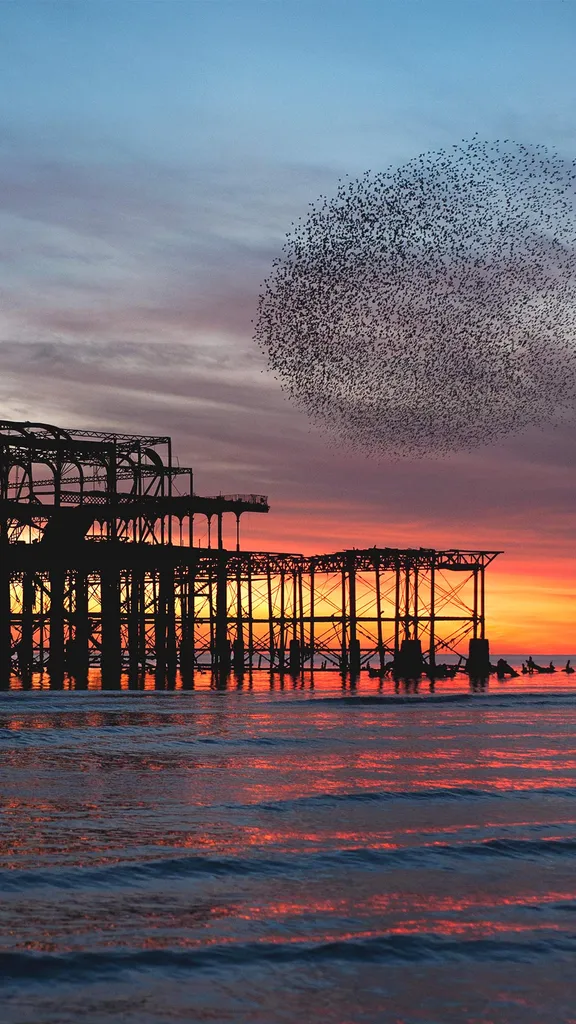
Starling murmuration over the ruins of Brighton's West Pier, England (© Philip Reeve/Photodisc/Getty Images)
When a bird is called a starling, you'd expect it to be a bit of a show-off. True to its name, this little creature knows how to steal the spotlight. From shimmering feathers that glint green and purple in the sun, to its ability to mimic sounds, the starling is the headline act. Originally native to Europe and Asia, the common starling has spread across the globe. In the 19th century, a group of them were introduced to New York's Central Park by an enthusiast of birds mentioned in Shakespeare's plays.
Brighton's West Pier in England may be a ruin, but when starlings gather above it, the scene is anything but broken. Each evening in autumn and winter, thousands of these small birds twist and turn in the air. The spectacle is called a murmuration, a term as musical as the sound of wings beating in unison. Scientists suggest the birds swoop and swirl to confuse predators, keep warm and share information about roosting spots. Whatever the reason, the result is a dance that has visitors gazing upward, phones in hand, hoping to catch a glimpse before the flock settles for the night.