
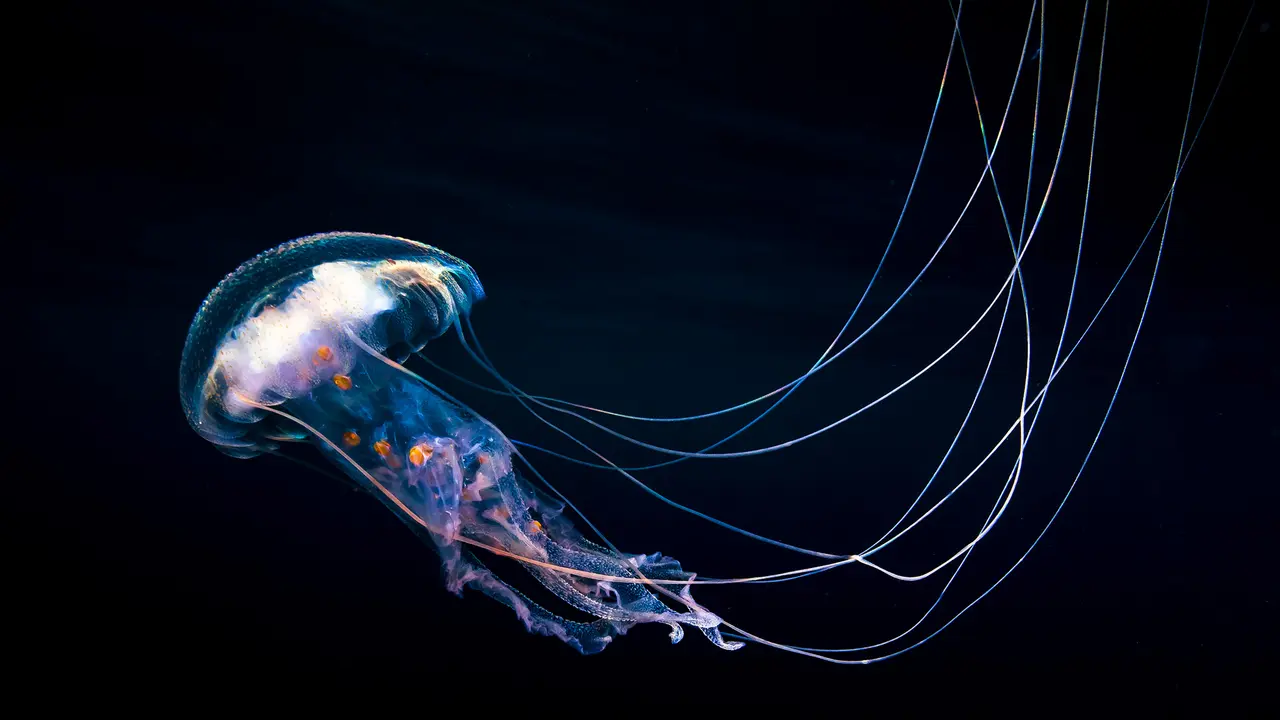
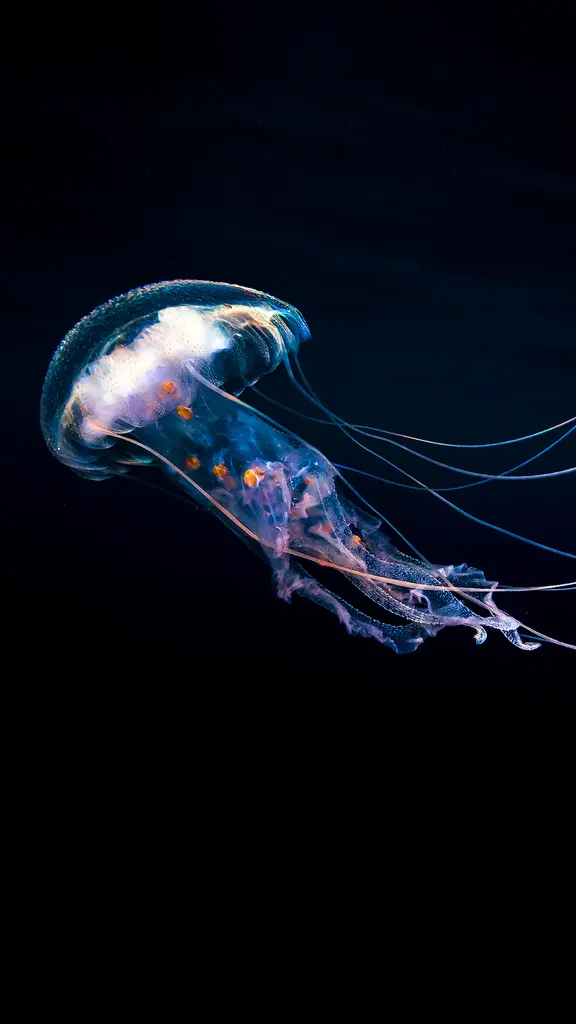
Jellyfish swimming in the Pacific, Guerrero, Mexico (© Christian Vizl/TANDEM Stills + Motion)
They don't have brains, bones or even hearts, yet jellyfish have pulsed through Earth's oceans for half a billion years. Don't be fooled by the 'fish' in their name: they belong to the invertebrate club called Cnidaria and they're made up of about 95% water. With their bell-shaped bodies and trailing tentacles, they're more like ocean drifters than deep-sea athletes. Some glow, like the one pictured here in the Pacific Ocean off Guerrero, Mexico, others pack stings and a select few, like the 'immortal jellyfish,' can reset their life cycle and start again.
Jellyfish are vital links in the food chain, feeding turtles, sunfish and seabirds. Their sudden population booms also act as alarms, signalling changes in the ocean caused by warming waters and overfishing. Let's give credit where credit is due—to the brainless blobs that have outlived dinosaurs, mastered the art of drifting and proved that sometimes being spineless is actually a strength.