
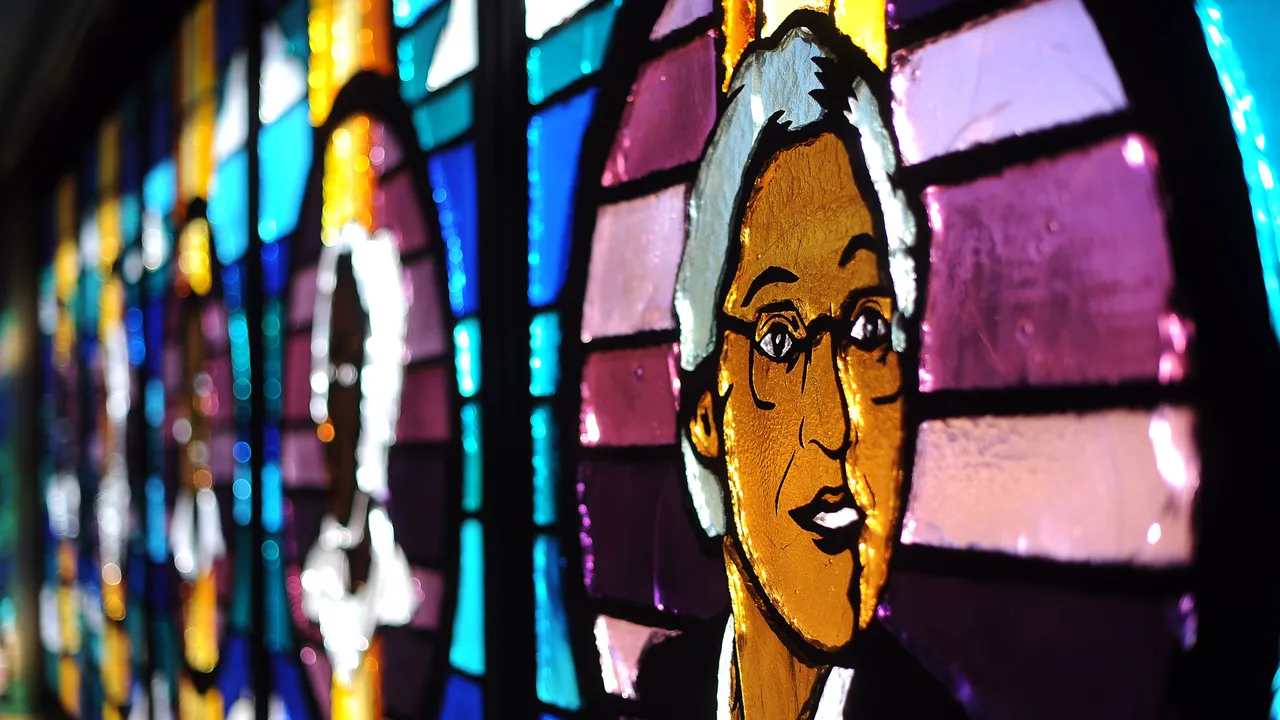

Rosa Parks in stained glass window, Shorter Community African Methodist Episcopal Church, Denver (© Cyrus McCrimmon/The Denver Post via Getty Images)
Picture this: it's 1955, a winter evening in Montgomery, Alabama. A seamstress heads home after work. The bus fills with other passengers. The driver demands she give up her seat. Rosa Parks wasn't trying to make waves, but her refusal set off a chain reaction that would propel the civil rights movement into a new phase. Raised in rural Alabama, she grew up under segregation and later worked with the NAACP as a secretary and investigator, gathering testimony of racial violence and discrimination. By the time she declined to move, she was already a committed activist.
Her arrest sparked the Montgomery Bus Boycott, a coordinated 381-day protest that helped end bus segregation. Rosa Parks Day emerged decades later to honor her work. First celebrated in 1998 in Michigan, it is observed on different dates across states, tied either to her birthday or to the day of her arrest. As Parks' national impact grew, she earned various medals, awards, and the distinction of being the first woman to lie in honor at the US Capitol rotunda. The stained-glass painting of Parks at Shorter Community African Methodist Episcopal Church in Denver, pictured here today, serves as a glowing reminder of a legacy that still reaches far beyond Montgomery.