
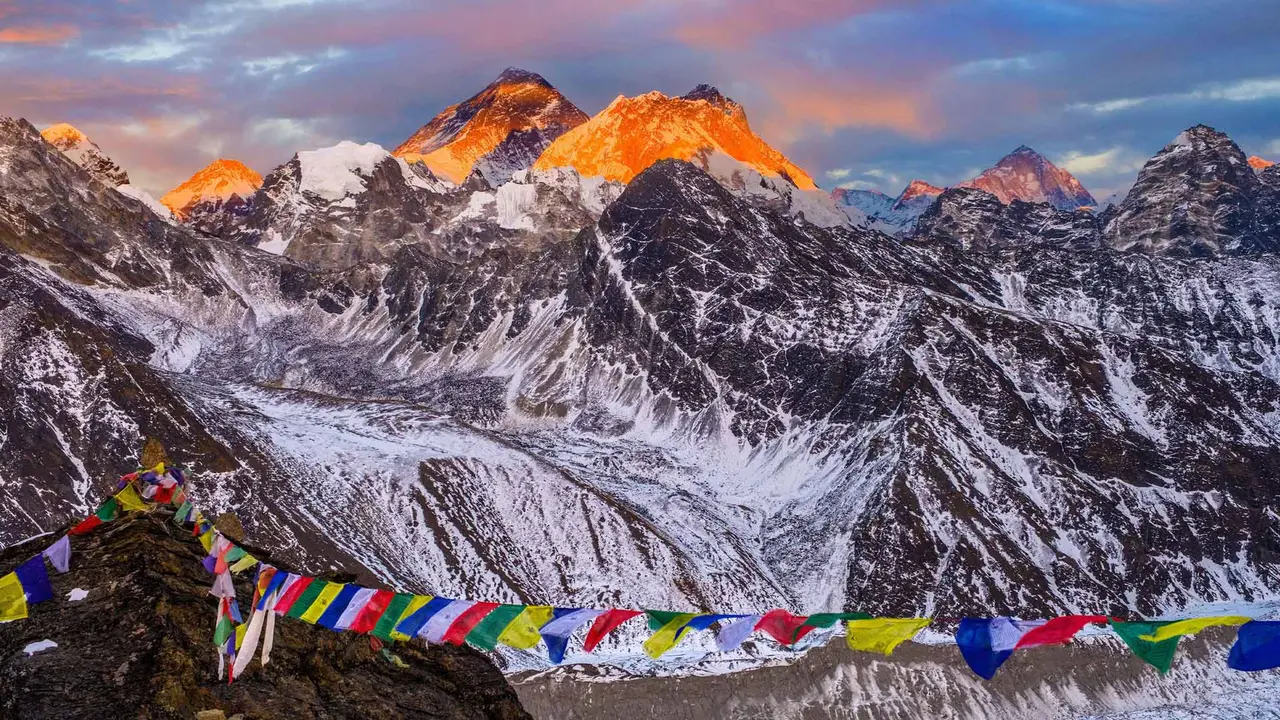

Summit of Mount Everest at sunset, seen from Renjo La, Nepal (© shoults/Alamy)
Every December 11, we celebrate International Mountain Day, honoring the majestic peaks that shape our planet and the glaciers that support life. From the rolling Alps to the towering Himalayas, mountains cover nearly a quarter of Earth's land and host 15% of the world's population and nearly half of its biodiversity hotspots. Mount Everest, the world's highest peak at over 29,000 feet, stands as a symbol of human aspiration and natural beauty. Its glaciers feed rivers sustaining millions, showing that mountains are more than scenery—they are lifelines.
Glaciers, holding about 70% of the world's fresh water, are melting rapidly due to rising global temperatures. This threatens agriculture, water security, energy production, and the livelihoods of billions. Retreating glaciers and thawing permafrost also heighten hazards like floods, landslides, and erosion, putting communities and infrastructure at risk.
This year, International Mountain Day is themed 'Glaciers matter for water, food, and livelihoods in mountains and beyond,' which emphasizes the urgent need to protect these vital ecosystems. Whether marveling at Everest or hiking a local ridge, the day invites us to reconnect with Earth's vertical landscapes and recognize their essential role in life, climate, and biodiversity.