
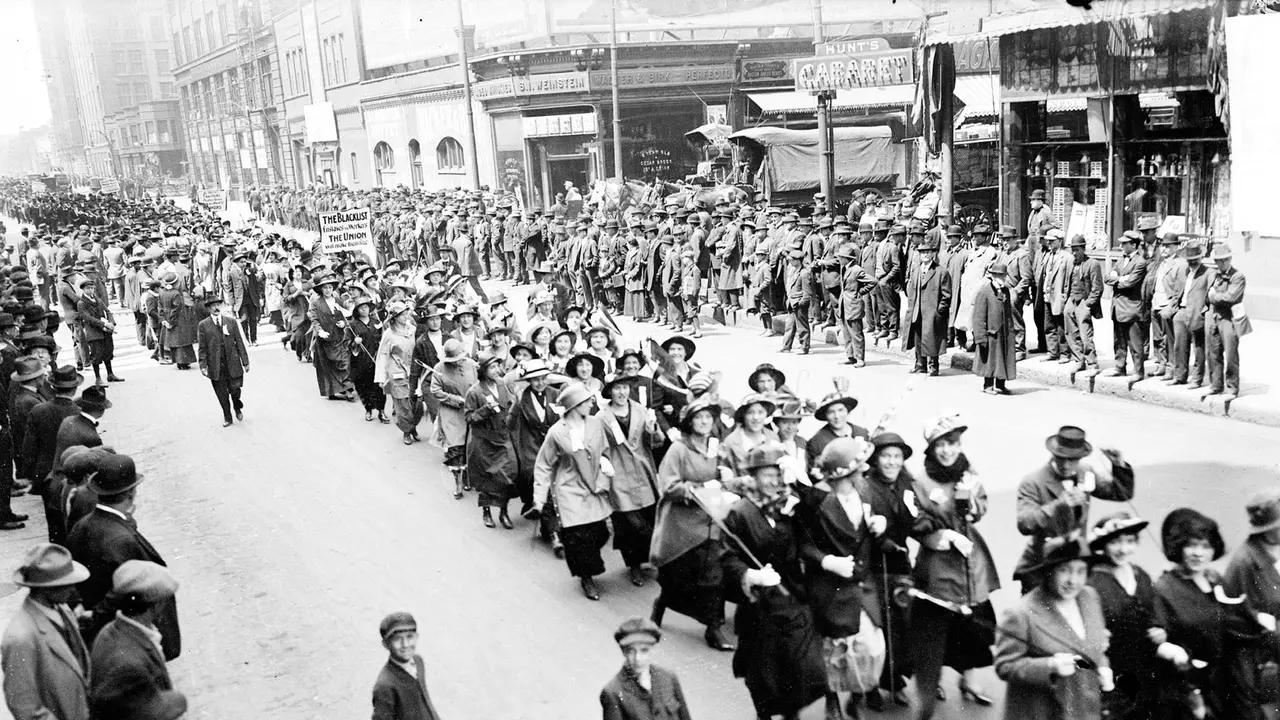
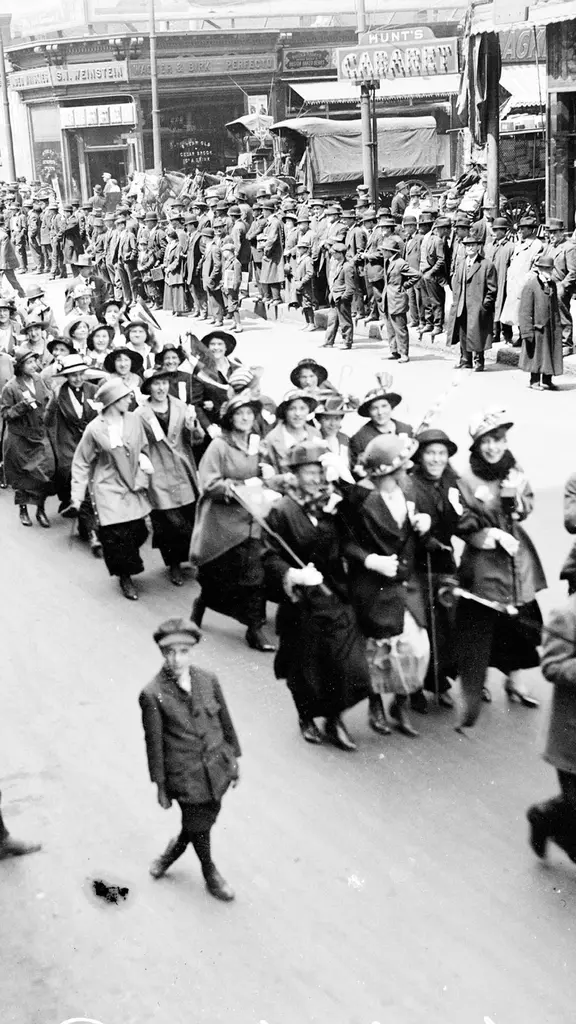
Amalgamated Clothing Workers of America in a Labor Day parade, May 1915, Chicago (© Chicago Sun-Times/Chicago Daily News collection/Chicago History Museum/Getty Images)
May 1915: Chicago buzzes with energy. Streetcars pass brick buildings, shop signs catch the morning light, and the city moves with purpose. But today, something different takes over the streets. The Amalgamated Clothing Workers of America, just months old, march in rows as sharp as the suits they craft. This isn't a quiet debut—it's a statement.
Formed by tailors and factory workers who broke away from more cautious unions, the Amalgamated brought together recent immigrants, skilled hands, and people tired of 14-hour shifts. In this parade, they're not behind machines—they're out front, holding banners high and showing what collective strength looks like.
Labor Day became a national holiday in 1894, but by 1915, it was still evolving—part celebration, part protest. Originally created to honor workers' contributions amid demands for fair wages, safer conditions, and shorter workdays, today, it's marked by barbecues, marches, sales, and one last summer break. It's a pause in the calendar that reminds us why time off matters—and a nod to those who keep the country moving.