
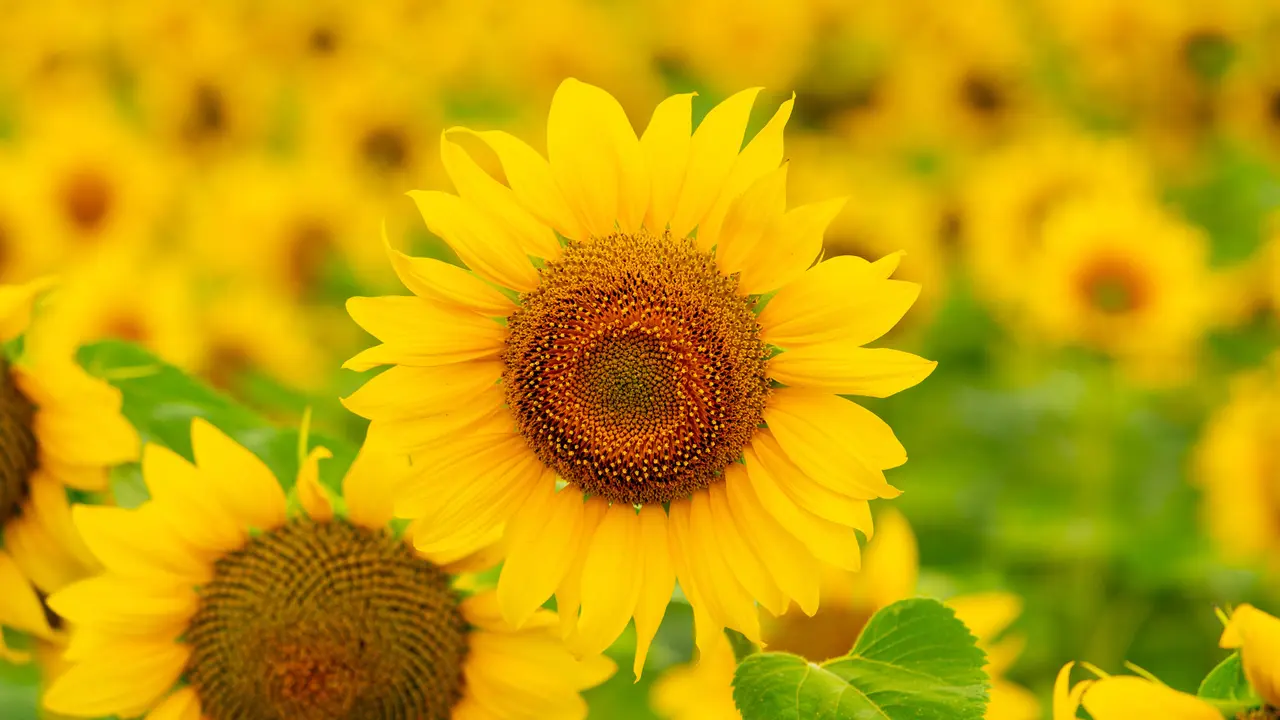
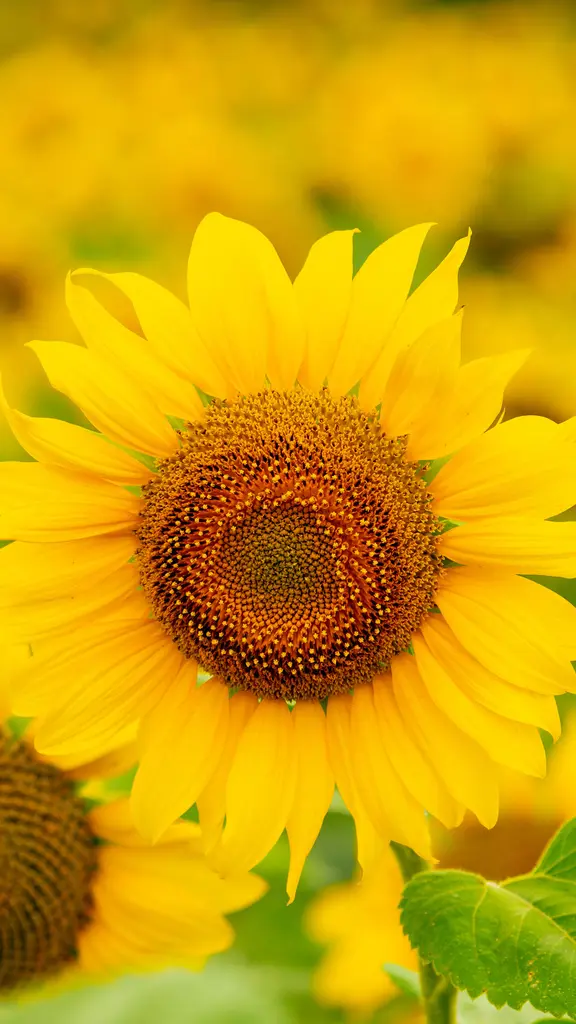
Sunflowers in a field in summer (© Arsgera/Shutterstock)
Many believe sunflower heads follow the sun, but only young buds do—mature flowers stay fixed, usually facing east.
Bright and bold, sunflowers are loved by bees, birds, and just about everyone. The name of their genus, helianthus, comes from the Greek words for sun (helios) and flower (anthos). These annual plants are known for their large, daisy-like flowers and radiant charm. While sunflowers come in shades of red, orange, and maroon, it's the classic yellow blooms with brown centers that are the most common.
Beyond their good looks, sunflowers are grown for their tasty seeds, which are snacked on, pressed for cooking oil, or offered as a treat for birds. Their value isn't a modern discovery—Native Americans cultivated them thousands of years ago. Sunflowers were often planted alongside corn, beans, and squash as a symbolic 'fourth sister,' reflecting their importance long before they became garden icons. The earliest evidence of domestication in the United States comes from Tennessee and dates back to around 2300 BCE. That long-standing legacy continues today, as sunflowers remain a staple in fields and backyards.