
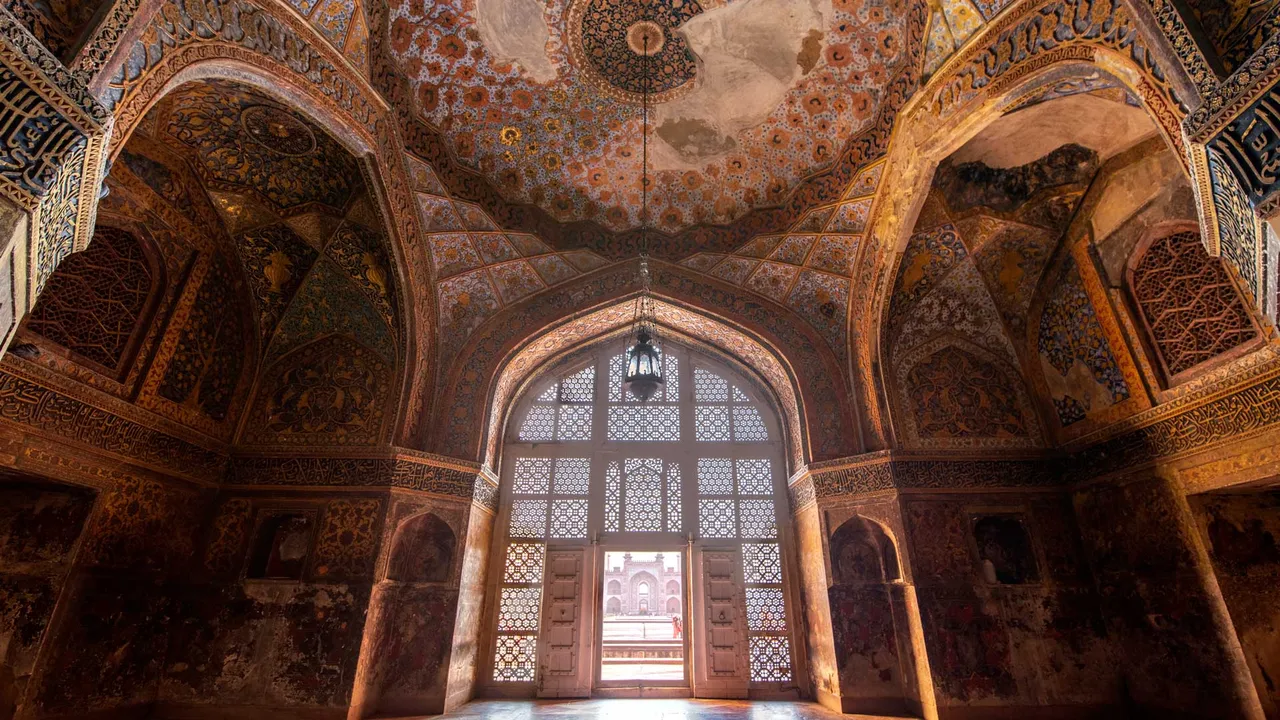
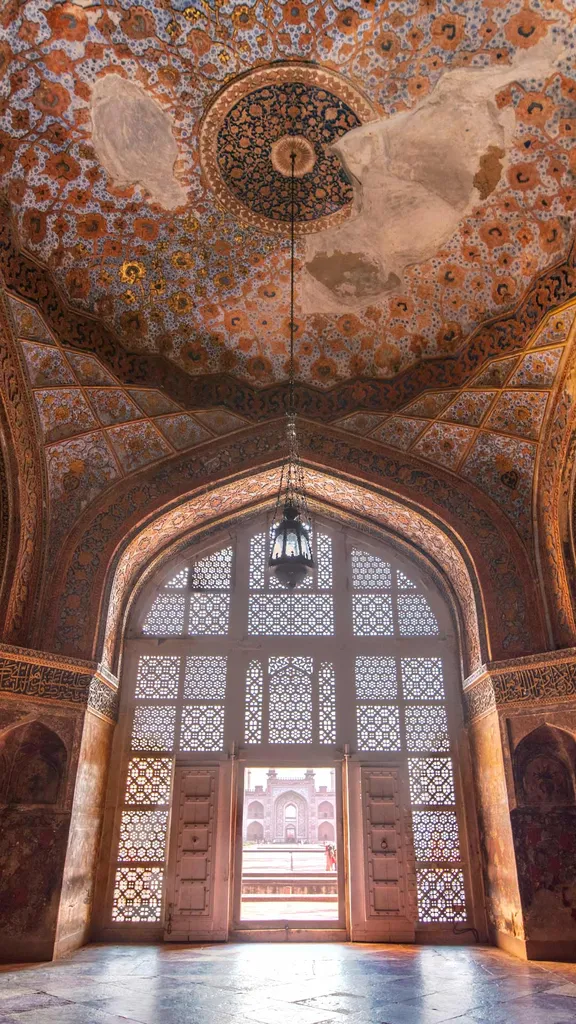
Akbar's tomb, Agra, Uttar Pradesh (© zeelichsheng/Shutterstock)
Some emperors leave behind crowns;. Akbar left a blueprint. Located in Sikandra, near Agra in Uttar Pradesh, Akbar's tomb reflects the vision of one of the Mughal Empire's most influential rulers. Built between 1605 and 1613 and completed by his son Jahangir, the mausoleum blends Islamic, Hindu, Buddhist and Persian design elements. It's unity carved in stone.
Unlike the marble spectacle of the Taj Mahal, this monument relies mainly on red sandstone with marble accents. The structure rises in five tiers, ending in an open marble pavilion instead of a dome. The complex is set within a charbagh (four-quartered) garden divided by pathways and water channels. Inside lies Akbar's cenotaph, while his actual grave rests below. Akbar ruled from 1556 to 1605. His empire expanded, but so did his ideas—especially religious tolerance. Even in death, he brings different worlds together.