
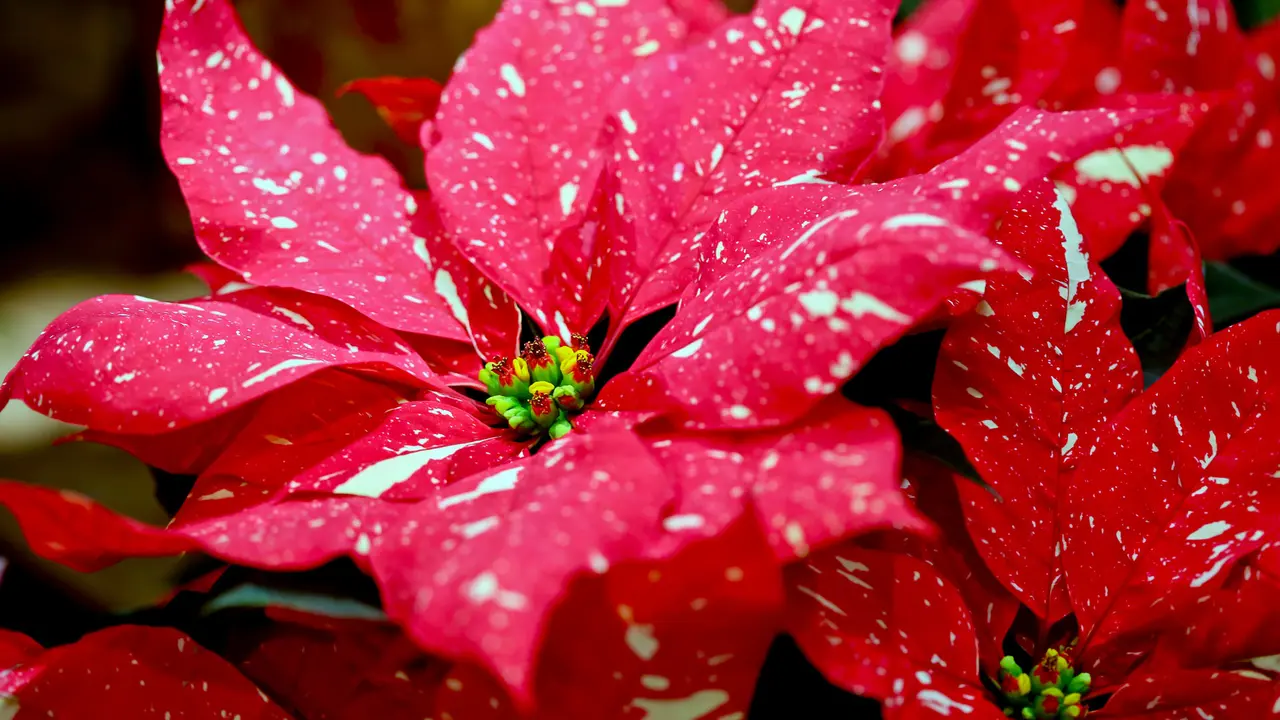
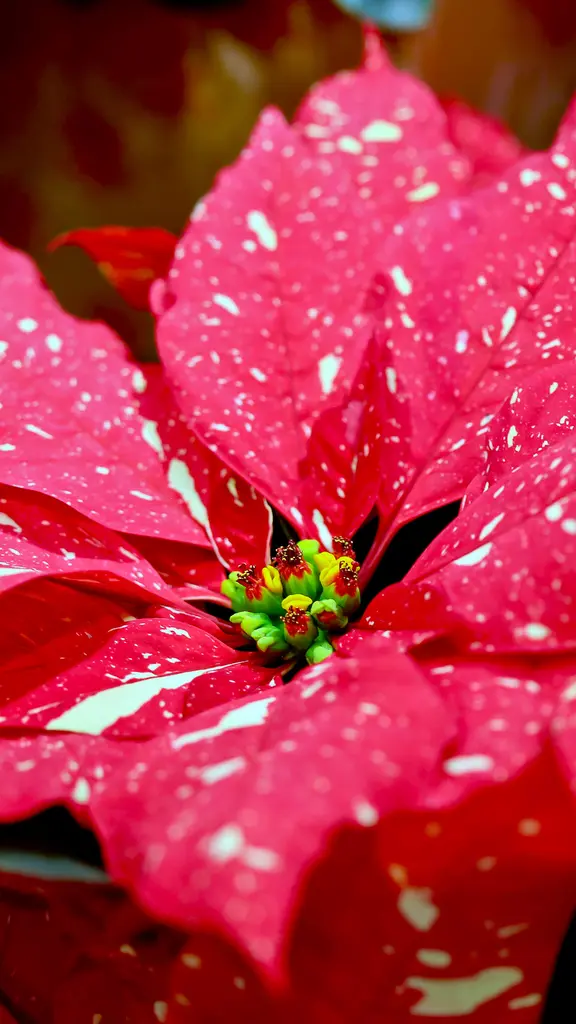
Spotted poinsettia (© DigiPub/Getty Images)
In Mexico, poinsettias are known as the 'Flores de Noche Buena' (Flowers of the Holy Night) and have been used in Christmas celebrations since the 17th century.
Some plants simply sit quietly on windowsills. The poinsettia? It demands the spotlight — bright, bold and as red as Rudolph's nose. Long before it became a popular Christmas decoration, it grew wild in Mexico, where the Aztecs used its leaves for dyes and its sap for traditional remedies. In the 19th century, it travelled across continents as people admired its vivid colour during colder months, eventually finding its place in winter celebrations around the world.
Its red 'petals' aren't petals at all, but bracts: modified leaves that frame the plant's true flowers, the tiny yellow buds at the centre. That striking contrast helped the poinsettia become a seasonal favourite, appearing today in over a hundred varieties, from pink and white to marbled and speckled.
Despite its festive fame, the poinsettia still has to fight off one persistent myth: that it is highly poisonous. The rumour spread widely in the 20th century and lingered for years, even though studies show the plant poses no serious danger. At most, it may cause mild irritation if eaten or handled by sensitive skin. What endures is its colour, its story and the warmth it brings to winter days.