
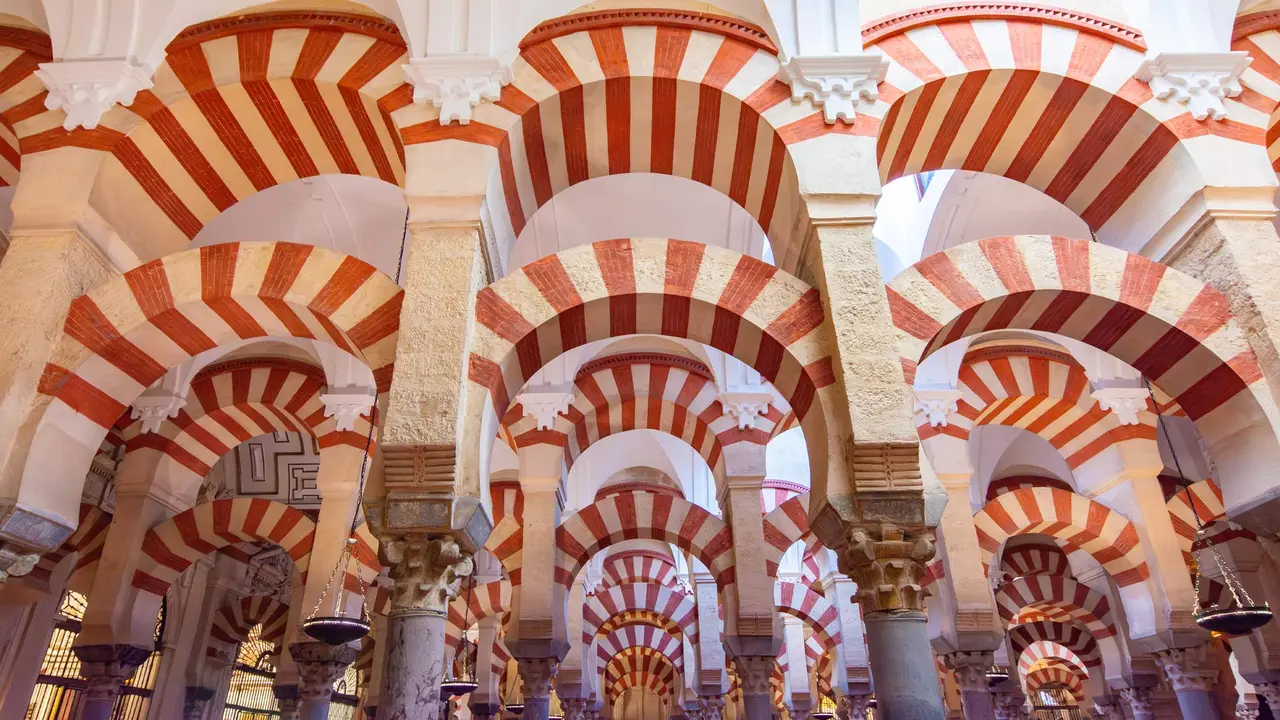
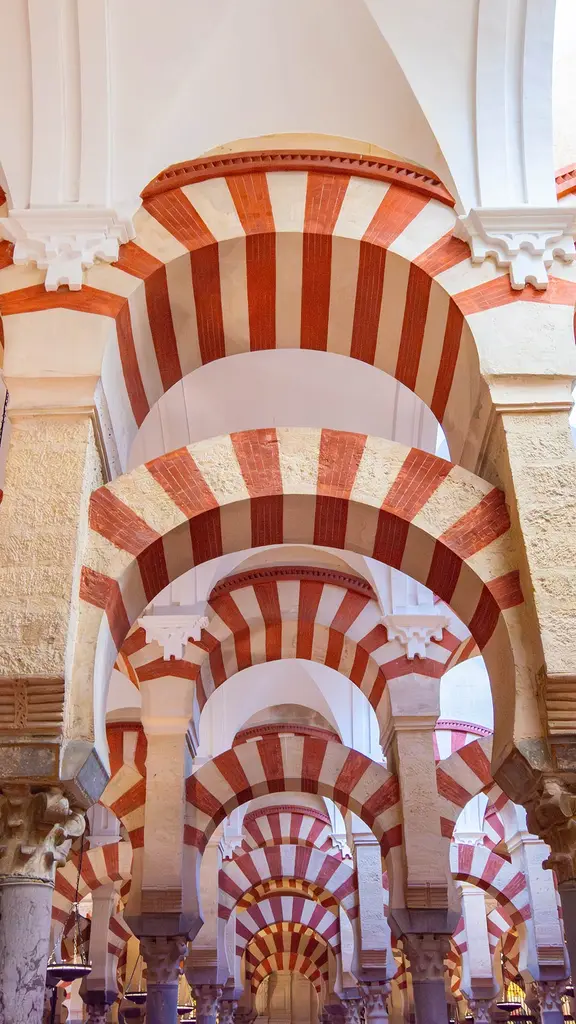
Interior of the Mosque-Cathedral of Córdoba, Andalusia, Spain (© Elena Zolotova/Getty Images)
The Mosque-Cathedral of Córdoba is a chronicle of Spain's layered history. It began as a church built by the Germanic Visigoths, before being transformed into a mosque in 784 CE by Abd al-Rahman I, founder of the Umayyad Emirate of Córdoba. Its vast hypostyle hall, a space supported by rows of columns, features the famous red-and-white arches shown here. Today, it contains more than 850 columns, many reused from Roman and earlier Visigothic structures.
During the Christian Reconquista in the 13th century—a campaign spanning centuries to reclaim Iberian territories from Muslim rule—the mosque was converted into a Catholic cathedral. Later, a Renaissance nave was added, blending Gothic, Renaissance and Baroque styles with Islamic heritage. Today, this UNESCO World Heritage Site attracts millions of visitors fascinated by its unique fusion of art, faith and history. Despite centuries of modifications, the original mosque's geometric patterns and horseshoe arches remain largely intact, offering a glimpse into Córdoba's multicultural past. The Mosque-Cathedral serves as a remarkable story of coexistence, conquest and architectural brilliance.