
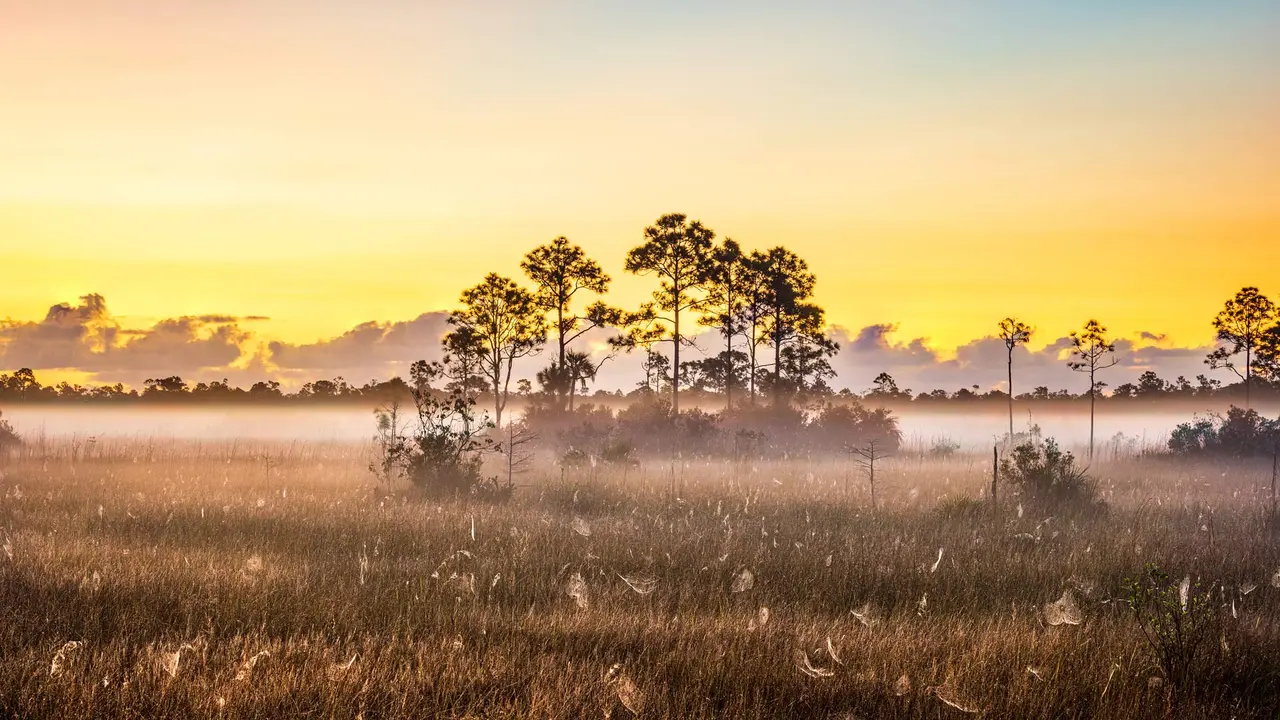
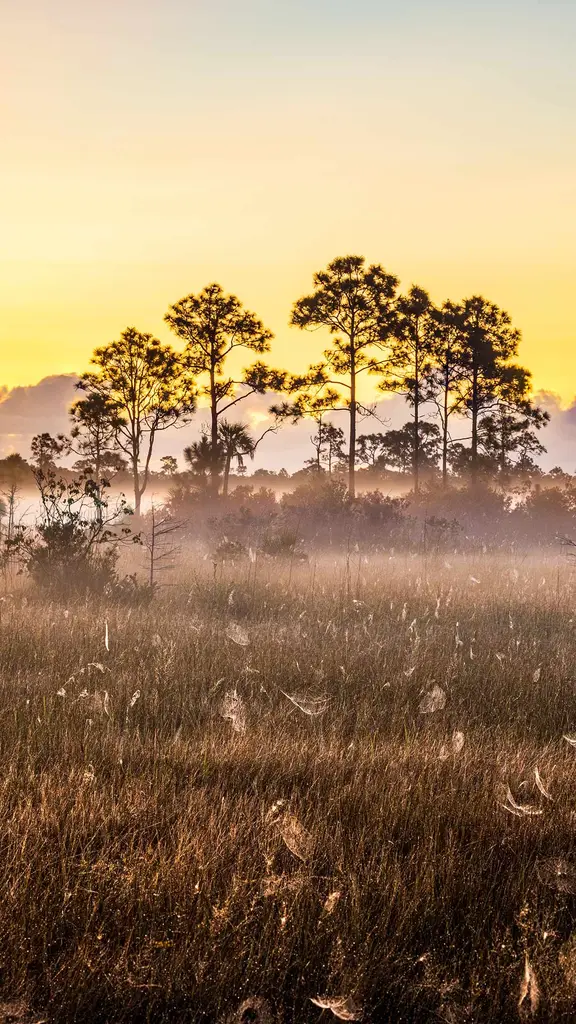
Spider webs in Everglades National Park, Florida, United States (© Troy Harrison/Getty Images)
On Florida's southern tip lies one of the United States' most unusual landscapes. The Everglades is not a typical swamp or river. It is a slow, shallow sheet of water that drifts south across flat grasslands toward Florida Bay, linking forests, marshes, mangroves and coastal prairies. This subtropical wilderness supports hundreds of species, including alligators, manatees and the endangered Florida panther. Spanning over 6000 square kilometres, it is one of the largest wetland ecosystems in North America—a place where land, sky and water meet in constant motion.
Spider webs stretch between reeds, catching light in fine reflections, as seen in the image featured today. The park is now a UNESCO World Heritage Site, yet its balance remains fragile: pollution, development and altered water flow still threaten its habitats. Major restoration efforts, including the Comprehensive Everglades Restoration Plan, aim to restore natural water patterns, reduce pollution and limit urban expansion. Within this mosaic, over 350 bird species live, both American crocodiles and alligators share its waters and panthers move through its quiet corridors. The Everglades endures as a working landscape, proof that protection means letting life keep moving.