
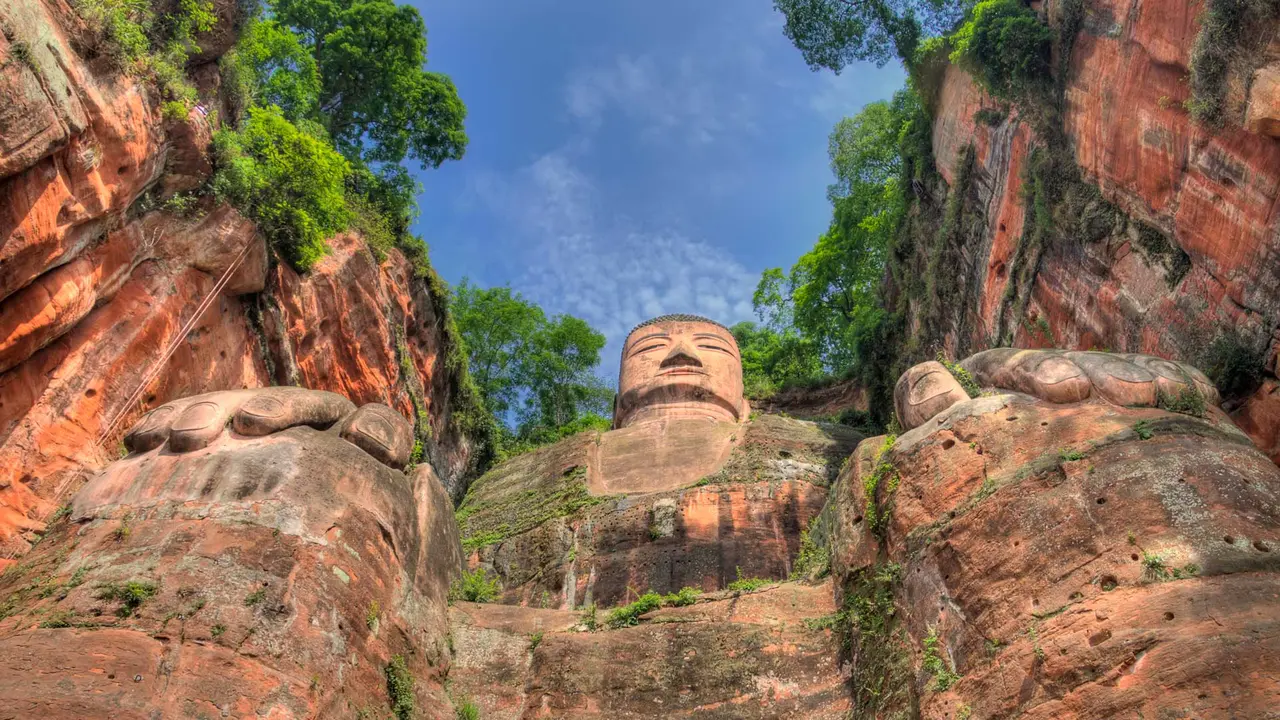
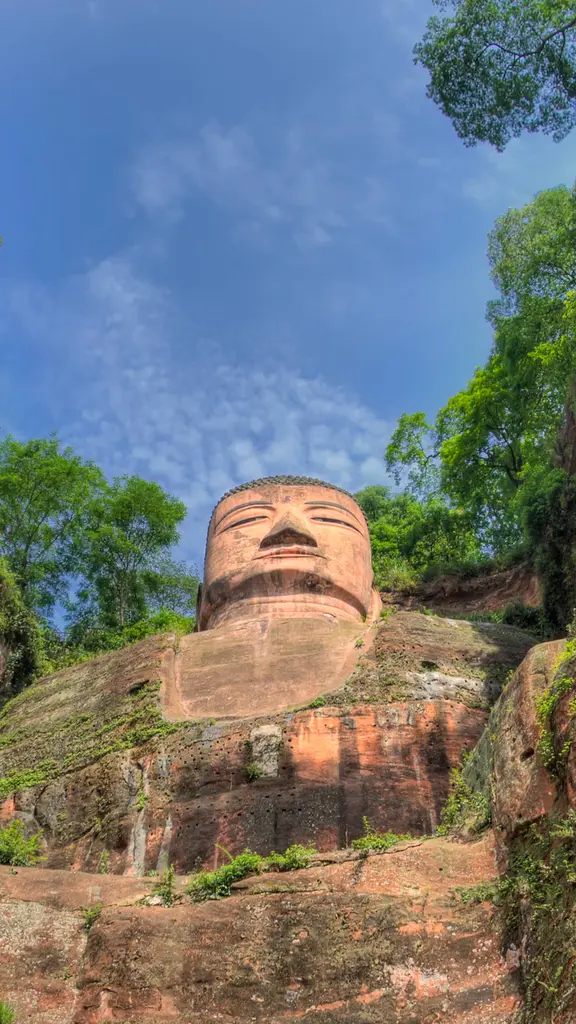
Leshan Giant Buddha, Sichuan, China (© www.anotherdayattheoffice.org/Getty Images)
There are big statues—and then there's the Leshan Giant Buddha. Carved into a riverside cliff at the confluence of the Min, Qingyi and Dadu Rivers in Sichuan, China, this statue is an ancient engineering marvel. Construction began in 713 CE under a monk named Hai Tong, who hoped that the Buddha's presence would calm dangerous river currents that threatened passing boats. He was so devoted that when funding ran out, he reportedly gouged out his own eyes to prove his sincerity. Construction took roughly 90 years and was completed long after Hai Tong's death. At approximately 70 metres tall, it is the largest stone Buddha in the world. Its shoulders stretch about 28 metres wide, its ears measure nearly 7 metres long and each foot extends over 8 metres. Drainage channels built inside the statue protect it from erosion, helping explain its remarkable preservation for more than 12 centuries.
Together with the Mount Emei Scenic Area, the Leshan Giant Buddha became a UNESCO World Heritage Site in 1996. Although time, weather and pollution have taken their toll, continuous conservation work ensures it remains one of China's most treasured cultural landmarks.