
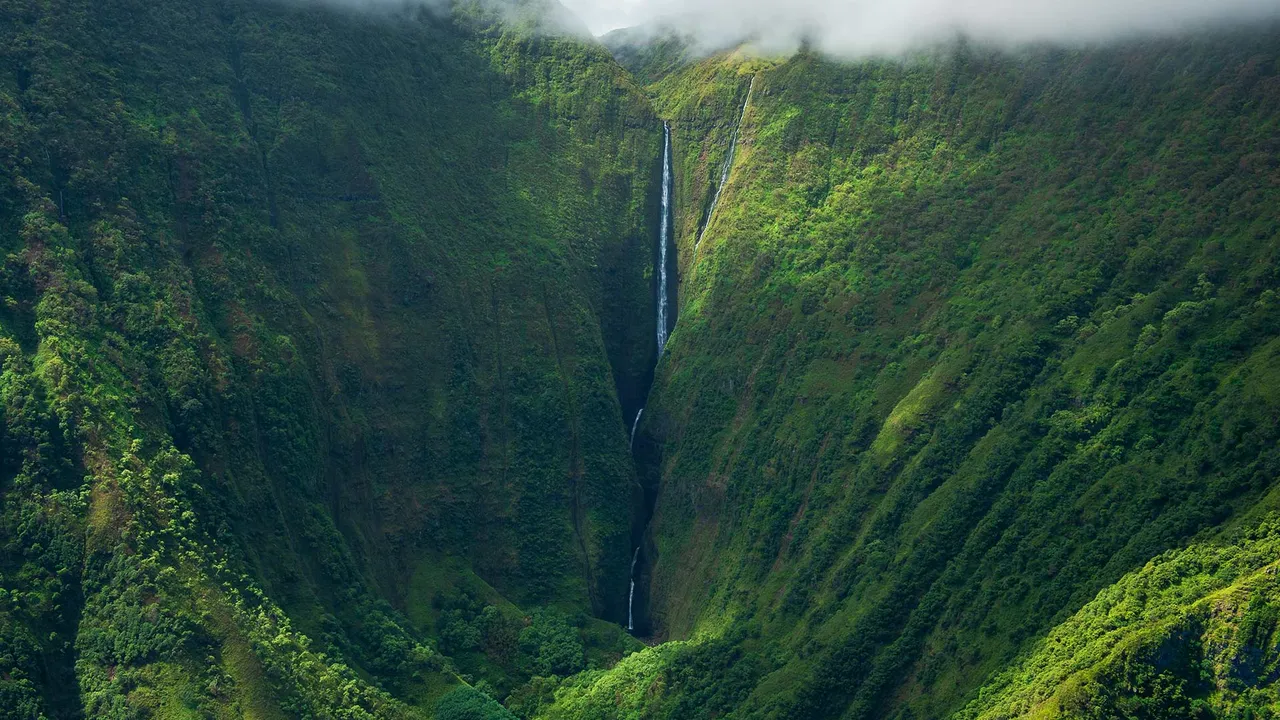
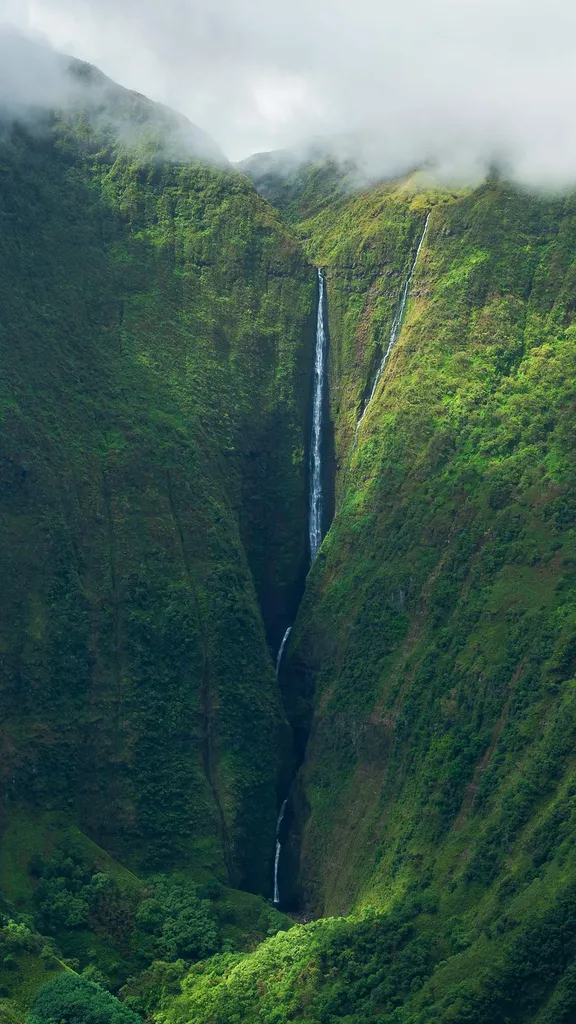
Olo'upena Falls, island of Moloka'i, Hawaii, United States (© Andrew Aylett/Getty Images)
Moloka'i, often called the most Hawaiian of the islands, offers a slower rhythm shaped by nature and strong community ties. Formed by volcanic activity more than a million years ago, the island covers about 260 square miles and rises from the Pacific Ocean in long ridges and broad valleys. Unlike its busier neighbours, Moloka'i has resisted large-scale development, preserving a strong sense of local cohesion where families, traditions and stewardship of the land encapsulate central values. Life here focuses on the ocean, the land and stories passed down through generations.
Seen in today's image, Olo'upena Falls towers above the island's north shore. Dropping 900 metres down steep sea cliffs, the falls are fed by seasonal rains and often fan into delicate silver streams. The surrounding sea cliffs, among the highest on Earth, are accessible only by helicopter or boat, adding to their mystique.
Today, Moloka'i's quiet roads, uncrowded beaches and close-knit community offer a rare chance to experience Hawaii as it once was—peaceful, welcoming and deeply connected to the land.