
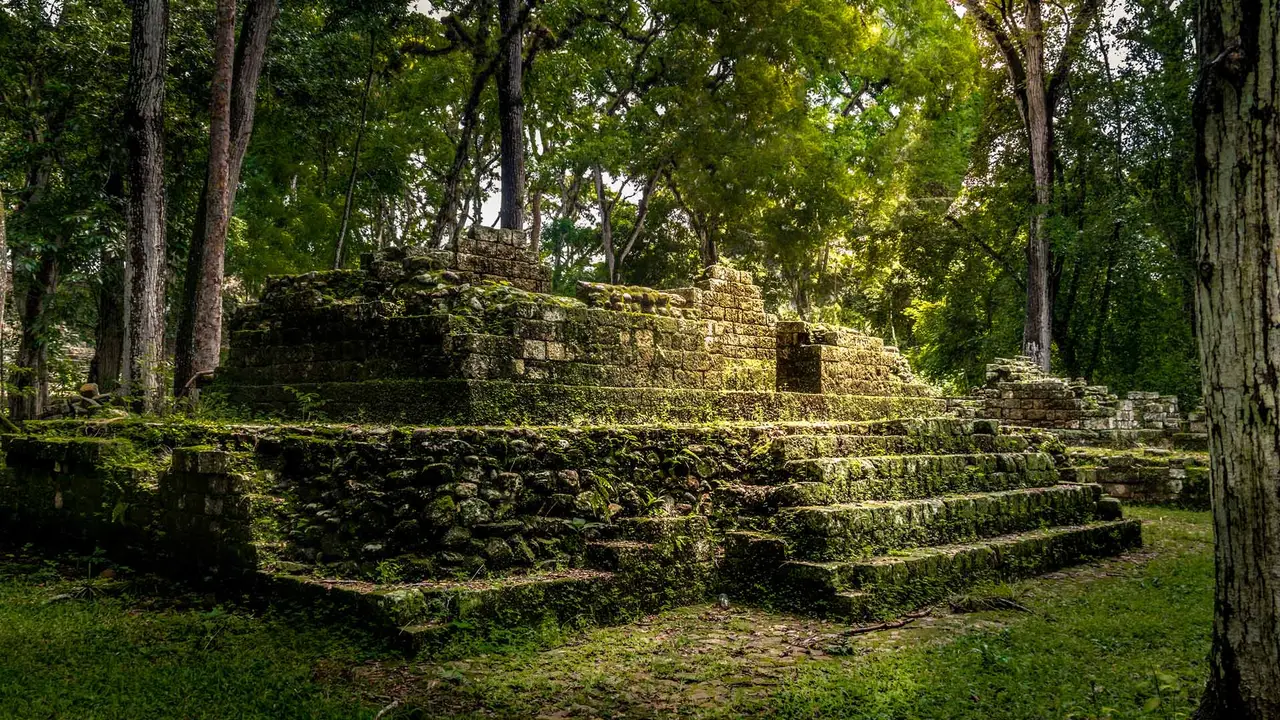
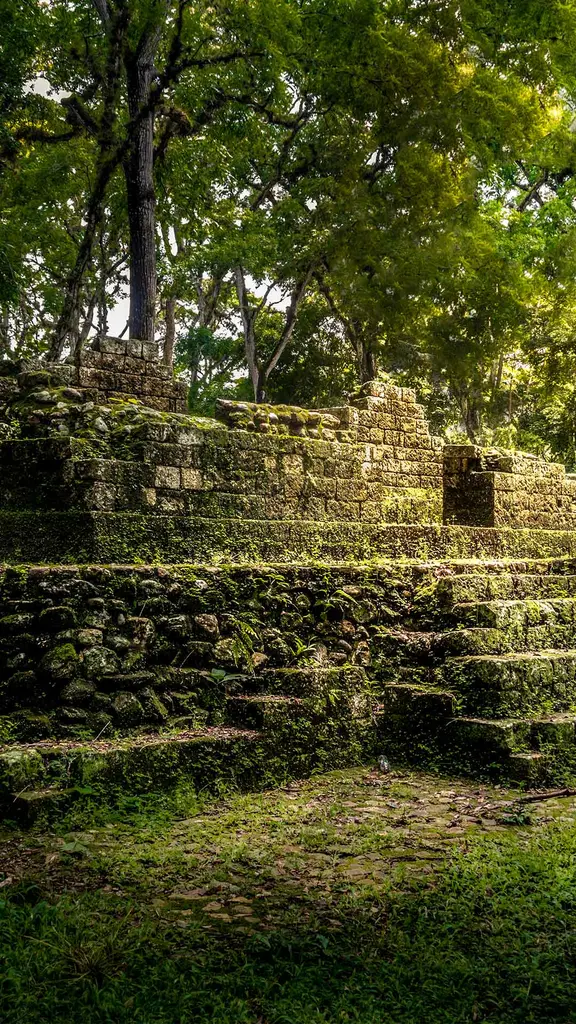
Maya site of Copán, Honduras (© diegograndi/Getty Images)
In a quiet valley of western Honduras lie the ruins of Copán—a city of the ancient Maya civilisation. Its sky served as both compass and calendar, guiding celestial events and shaping temples, rituals and the rhythm of life. Around 426 CE, K'inich Yax K'uk' Mo', a warrior from the Maya heartland, founded Copán and established its royal dynasty. The city became a centre of Maya art, astronomy and power.
At the heart of Copán stand two monuments—stories in stone—that reflect its artistic and political brilliance: the Hieroglyphic Stairway and Altar Q. The stairway rises in 63 carved steps covered with more than 2,000 glyphs—the longest Maya inscription ever found—recording reigns, ceremonies and ambitions that shaped the city's power. Altar Q, standing beside it, translates that history into sculpture, portraying 16 rulers in sequence, preserving the story of a dynasty in stone. Rediscovered in the 19th century and designated as a UNESCO World Heritage Site in 1980, Copán remains one of the finest achievements of the ancient Maya. Today, it endures in the precision of its stonework—proof that art can outlast even the world that built it.