
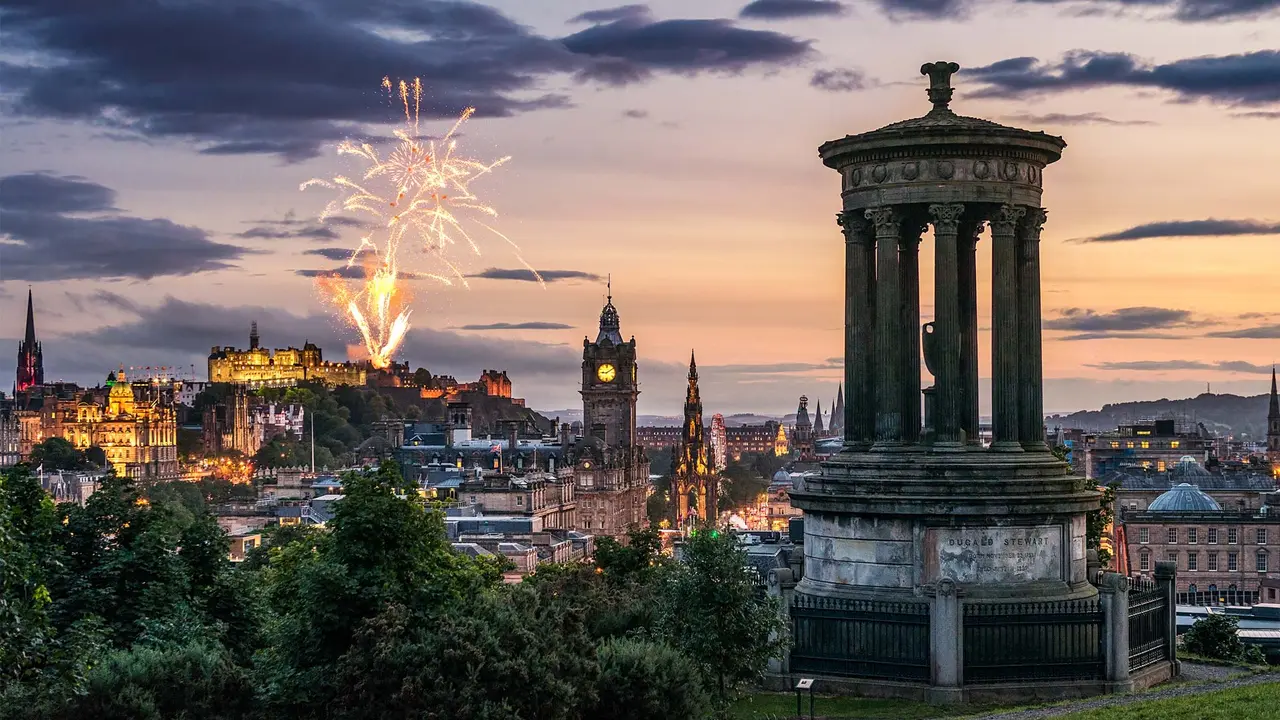
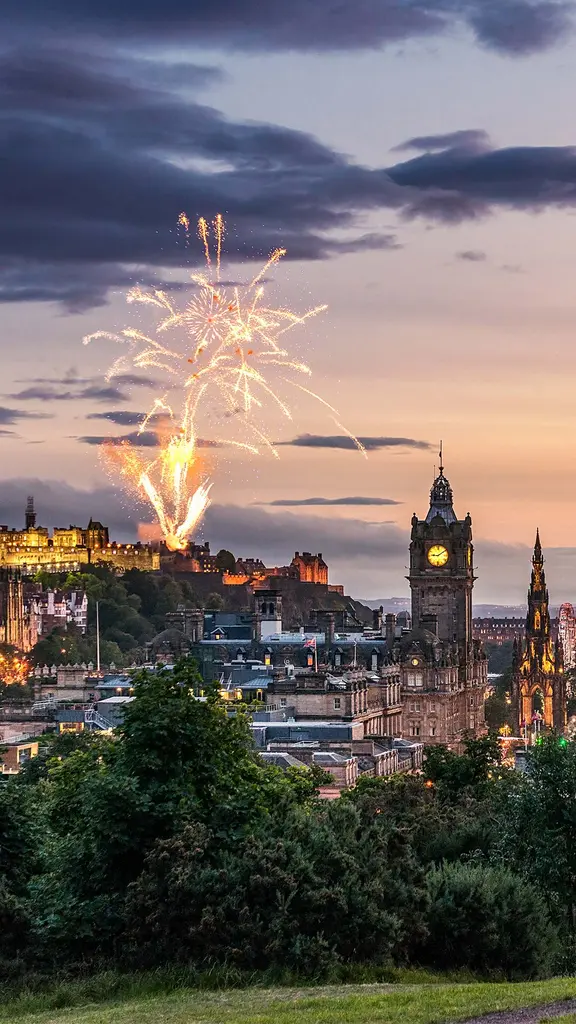
Fireworks over Edinburgh seen from Calton Hill, Scotland (© georgeclerk/E+/Getty Images)
When 30 November rolls around, Scotland doesn't just turn up the heat—it turns up the pipes. St Andrew's Day marks a national celebration of the country's patron saint, its history and all things tartan, toasted and toe-tapping. St Andrew wasn't born here—he was a fisherman from Galilee and one of Jesus' twelve apostles. According to legend, his relics were brought to the east coast of Scotland in the 4th century, giving rise to the town of St Andrews and inspiring the country's flag, the white saltire cross on blue.
Today, the day is less about solemn rituals and more about spirited revelry. Ceilidh dancing, folk music, storytelling and food like haggis (a savoury pudding) and tatties (potatoes) take centre stage. The phrase 'Slàinte mhath!' (good health) echoes through pubs and community halls alike. Cities like Edinburgh and Glasgow host parades, concerts and cultural festivals, while smaller towns keep things intimate with firesides, fiddles and family gatherings. It's also a public holiday in Scotland, which makes it perfectly acceptable to take the day off and dance like nobody's watching.