
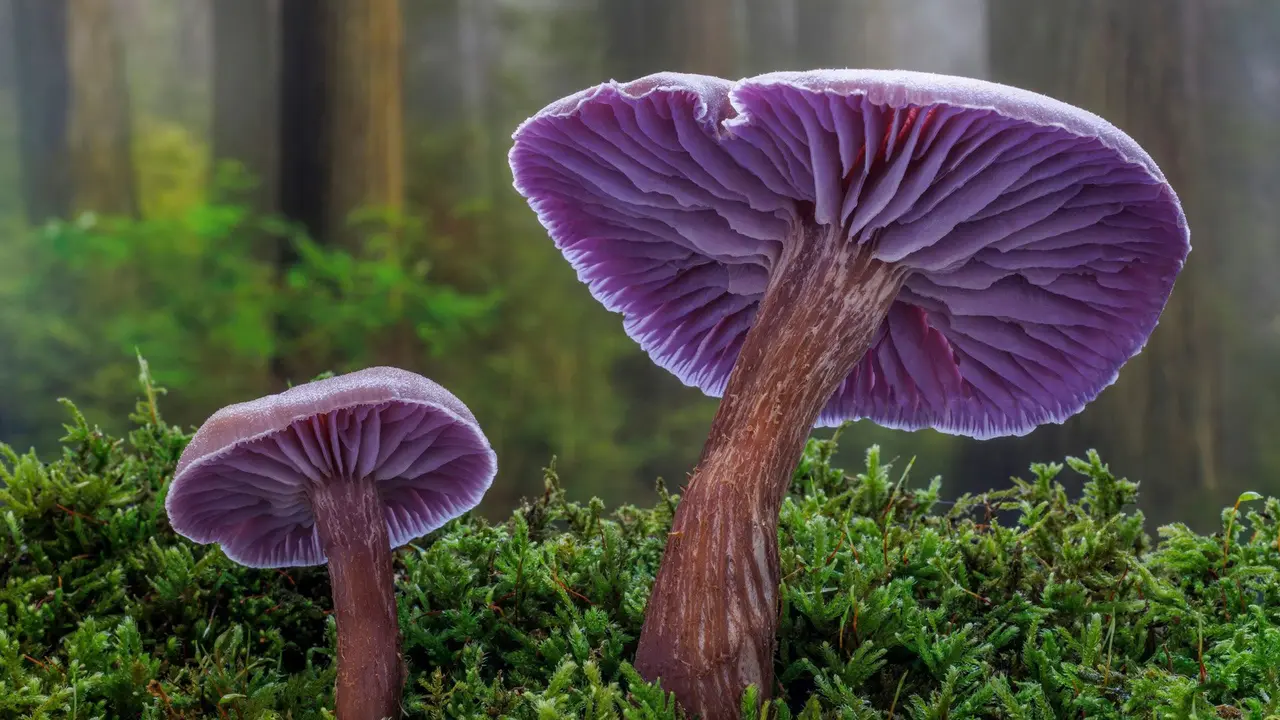

Amethyst laccaria mushrooms, Seabeck, Washington, United States (© Danita Delimont/Shutterstock)
Far more than pizza toppings or sautéed sides, mushrooms are ecological powerhouses, essential for healthy forests. They break down dead matter, recycle nutrients and support tree growth through underground networks called mycorrhizae. Some also help store carbon in the soil, playing a role in climate regulation.
Today's image features the amethyst laccaria. Also known as the amethyst deceiver, its bright purple colour is dazzling when young, but it fades with age and weathering, making it tricky to identify. Despite its delicate, ever-changing appearance, this jewel-toned fungus is edible and plays a vital role in the ecosystem. The species is widely found across temperate regions of Europe, Asia and North America, appearing from June to December. It typically grows alone or in small groups beneath both deciduous and coniferous trees, forming mycorrhizal associations. While it can partner with many hosts, it shows a particular preference for trees of the Fagales order, especially beech.