
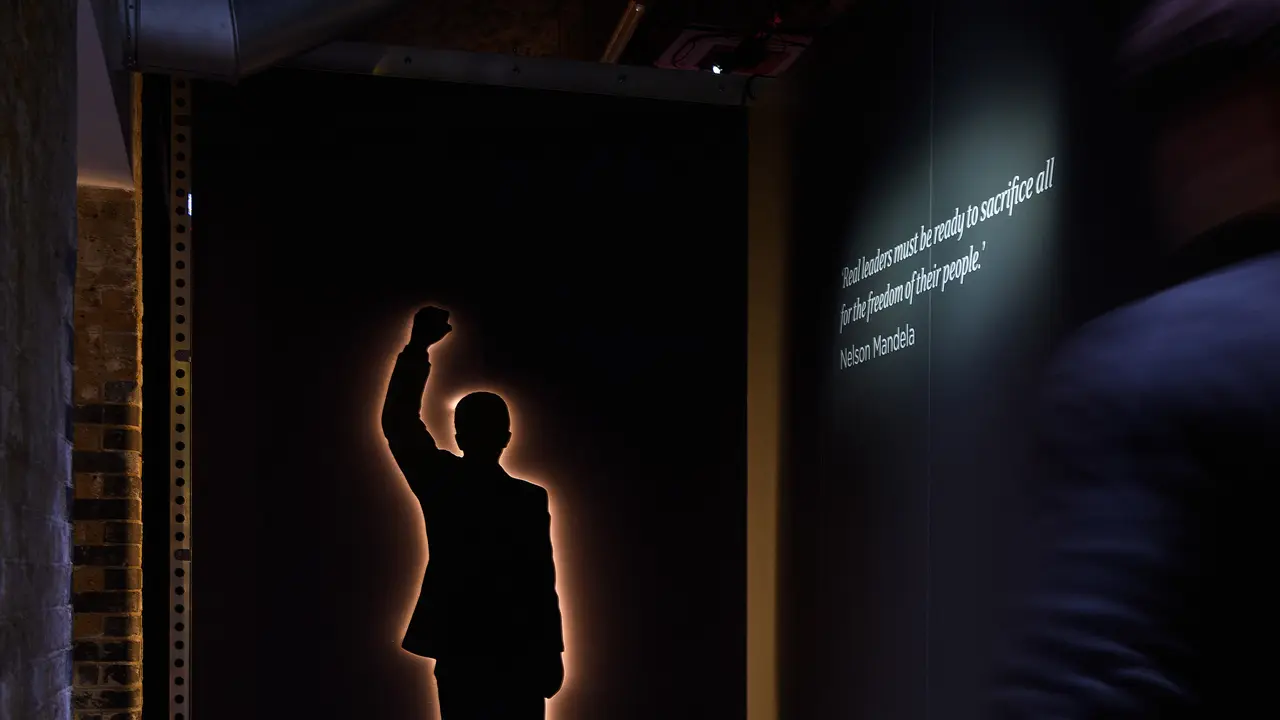
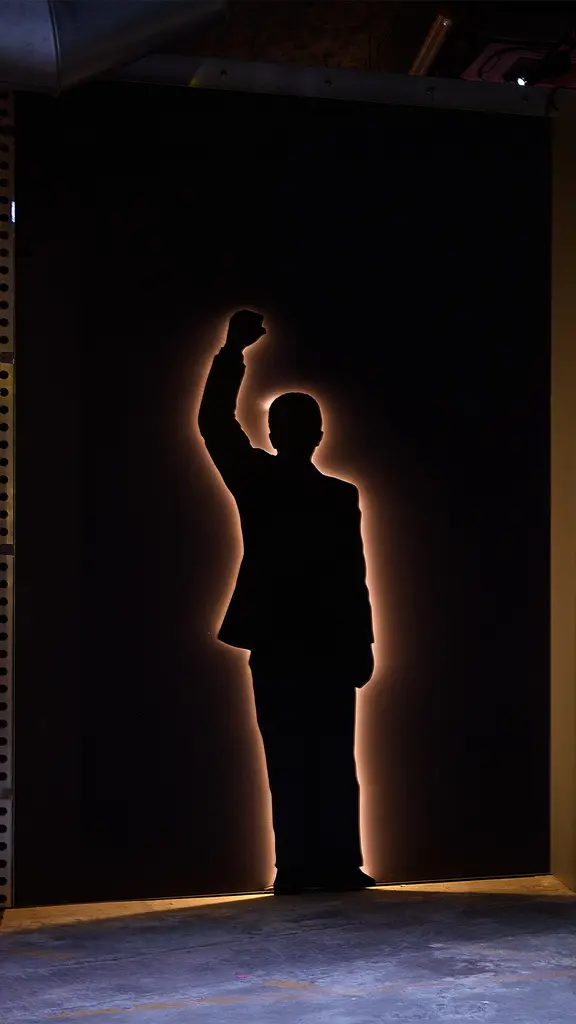
Silhouette of former South African President Nelson Mandela, 26 Leake Street, London, 2019 (© Leon Neal/Getty Images)
October in the United Kingdom isn't just about falling leaves—it's about rising voices. Black History Month highlights the achievements, struggles and contributions of Black people. First marked in 1987 by Akyaaba Addai-Sebo, a Ghanaian officer at the Greater London Council, the month was created to inspire pride and representation among young Black people. Since then, it has grown into an annual tradition of learning and celebration.
From pioneers like Mary Seacole, the Crimean War nurse who stood shoulder to shoulder with Florence Nightingale, to cultural icons in music, literature and politics, this event brings overlooked legacies into focus. Few names resonate as strongly as Nelson Mandela's. Though his fight against apartheid was rooted in South Africa, his story found echoes in Britain. Jailed for 27 years for resisting apartheid, he walked free in 1990 and, just four years later, became South Africa's first Black president. During his years in prison, British activists kept the pressure alive with boycotts and marches. Mandela's eventual triumph symbolised that justice, though delayed, could never be silenced.