
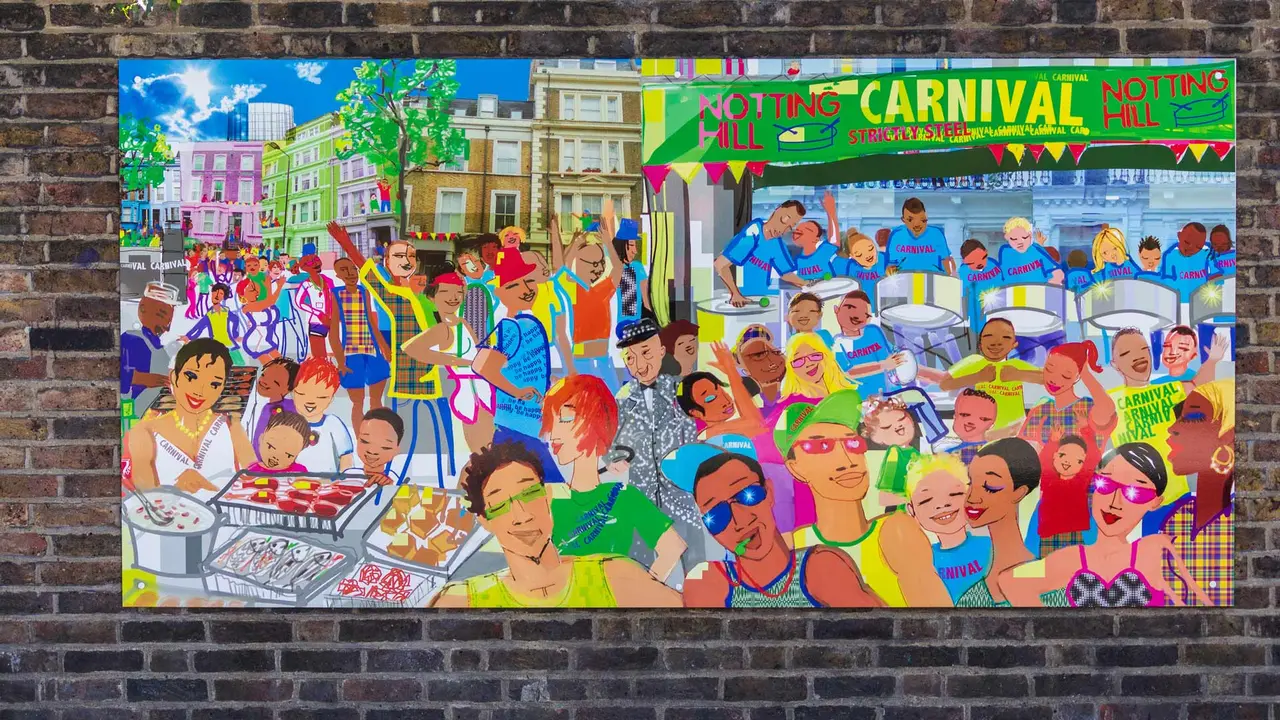
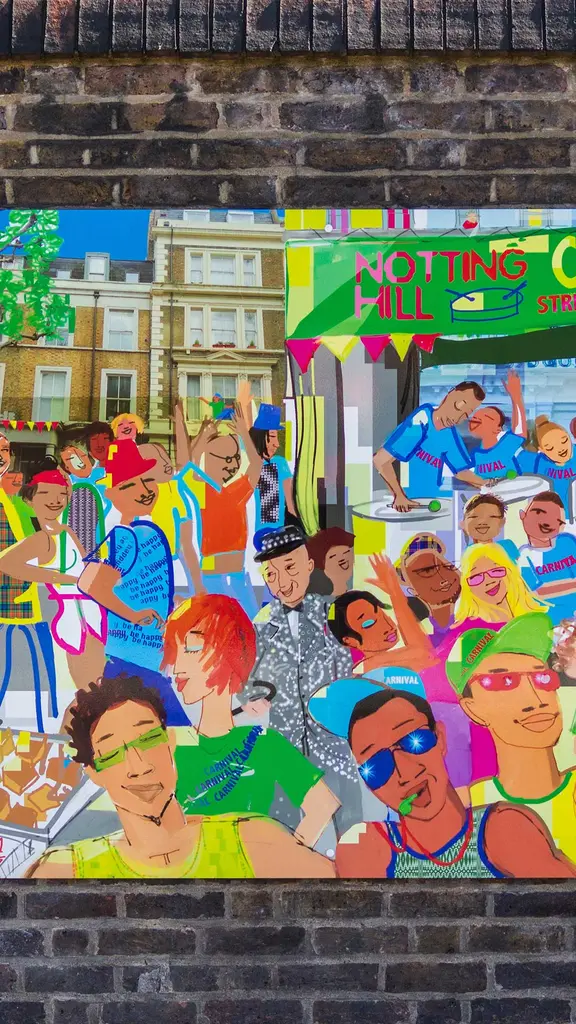
Notting Hill Carnival wall mural, London (© BRIAN ANTHONY/Alamy Stock Photo)
When London lets its hair down, it doesn't just dance—it carnivals. Every August bank holiday weekend, Notting Hill turns up the volume, the colour and the spirit, as one of the world's biggest street festivals takes over west London. The Notting Hill Carnival is more than feathers and steel drums; it's a celebration of Caribbean culture, resistance and rhythm, all sashaying down Ladbroke Grove like it owns the road. What started in 1966 as a response to racial tensions has grown into a joyful rebellion of music, movement and mouthwatering food. It's now a fixture on London's cultural calendar, with over two million people attending annually.
The carnival's masquerade bands spend months creating dazzling costumes, many of which reflect themes of heritage and identity. Steelpan orchestras, soca sound systems, calypso singers, reggae DJs—if it's Caribbean, it's playing. More than 30 sound systems are scattered across the neighbourhood. Hungry? Follow the smoky trail of jerk chicken. Or grab a roti, patties, fried plantain or anything else that fits in your hand and explodes in flavour. Beyond music and movement, the parade isn't just a party—it's a statement of presence, resilience and belonging.