
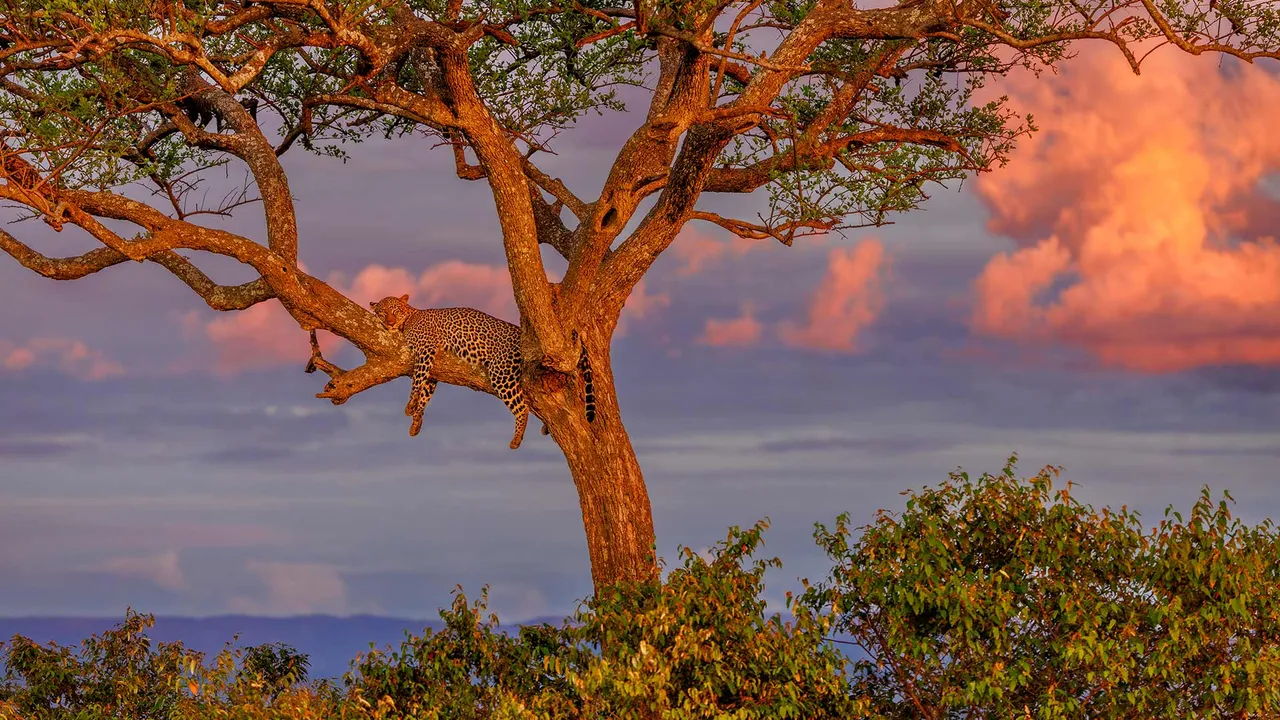
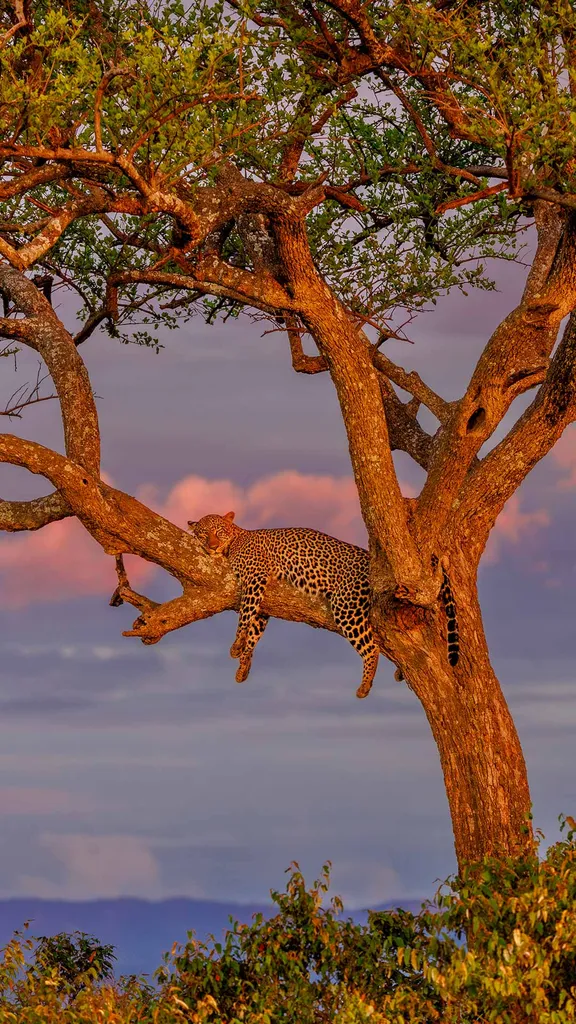
Leopard sleeping in a tree in the savannah, Masai Mara National Reserve, Kenya (© Klein & Hubert/Nature Picture Library)
Leopards have lost about 75% of their historical distribution and are classified as 'vulnerable' by the IUCN.
High above the savannah in Kenya's Masai Mara, a leopard curls up on a tree branch, napping as the grasslands glow at sunset. On International Leopard Day, observed on May 3, we celebrate one of the world's most adaptable big cats. Leopards roam across Africa and parts of Asia, thriving in habitats that range from forests and mountains to open savannahs. Their spotted coats are unique to each individual, like fingerprints, and their powerful climbing skills allow them to stash prey high in trees, out of reach of scavengers.
Mostly active at night, leopards rely on stealth, sharp senses and patience rather than speed. Despite their resilience, global populations are declining due to habitat loss and conflict with humans. International Leopard Day invites us to learn more—and help ensure these remarkable cats keep their place in the wild.