
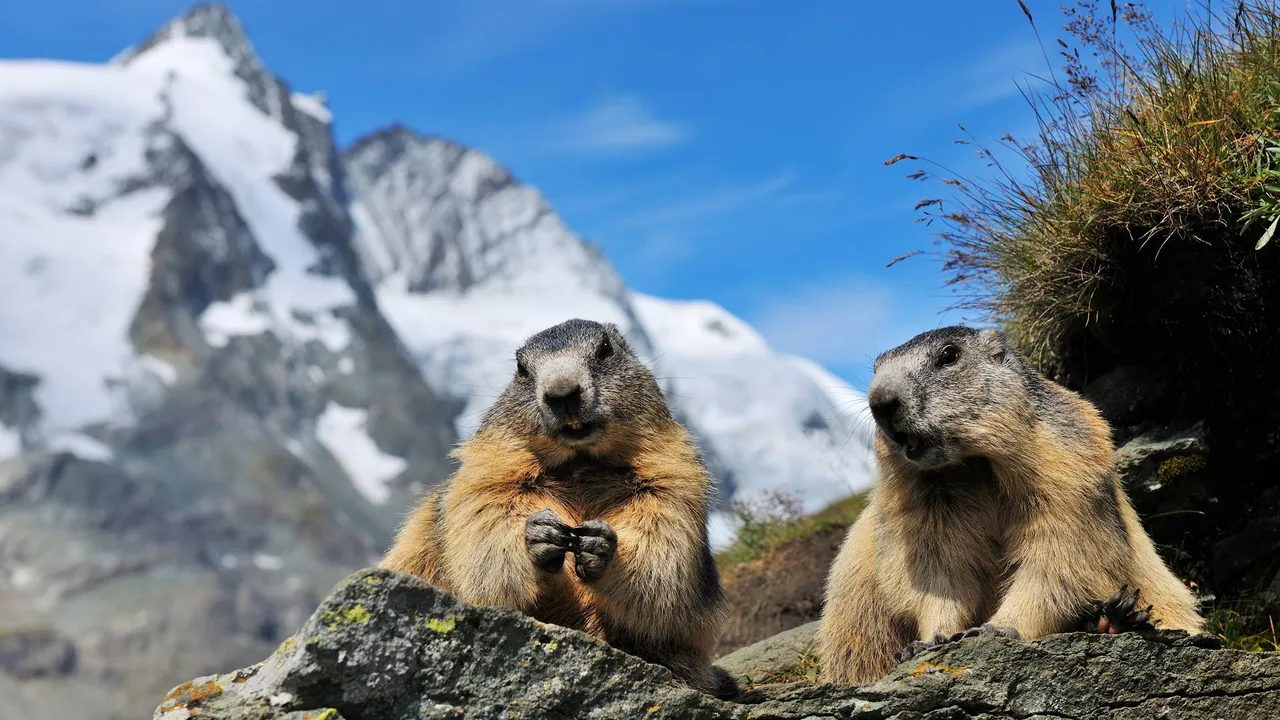
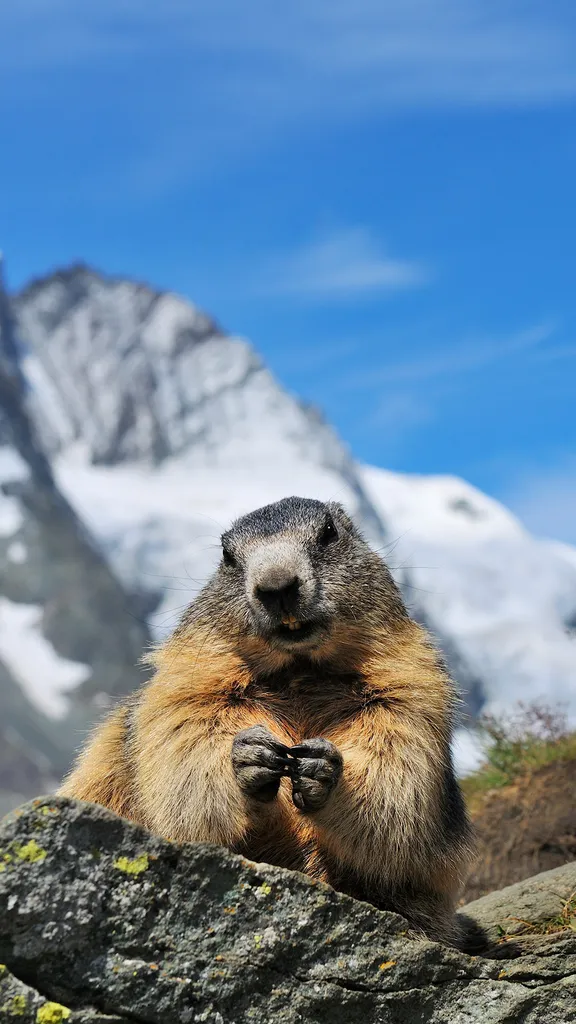
Alpine marmots, Hohe Tauern National Park, Austria (© Raimund Linke/Getty Images)
Every February 2, the world turns its eyes to a furry little forecaster with a penchant for popping out of holes: the groundhog. Legend has it that if this pint-sized predictor sees its shadow, winter drags on for six more weeks. No shadow? Spring is just around the corner.
Groundhog Day traces back to an old European tradition where animals like hedgehogs or badgers were believed to forecast the weather. When German immigrants settled in Pennsylvania, the role passed to local groundhogs, leading to the rise of Punxsutawney Phil. In Canada, the tradition took on a life of its own, with local prognosticators such as Wiarton Willie in Ontario becoming winter celebrities. Every year, crowds gather while millions tune in from home, all watching closely for signs of an early spring.
Across the Atlantic, the idea of reading the seasons through wildlife has its own twist. In the Alps, people watch for Alpine marmots, seen in today's image. After a long winter nap, these mountain dwellers emerge from their burrows into the light, often signalling warmer days ahead. They never got an official 'shadow ceremony,' but their timing acts as nature's quiet calendar in high-altitude communities.