
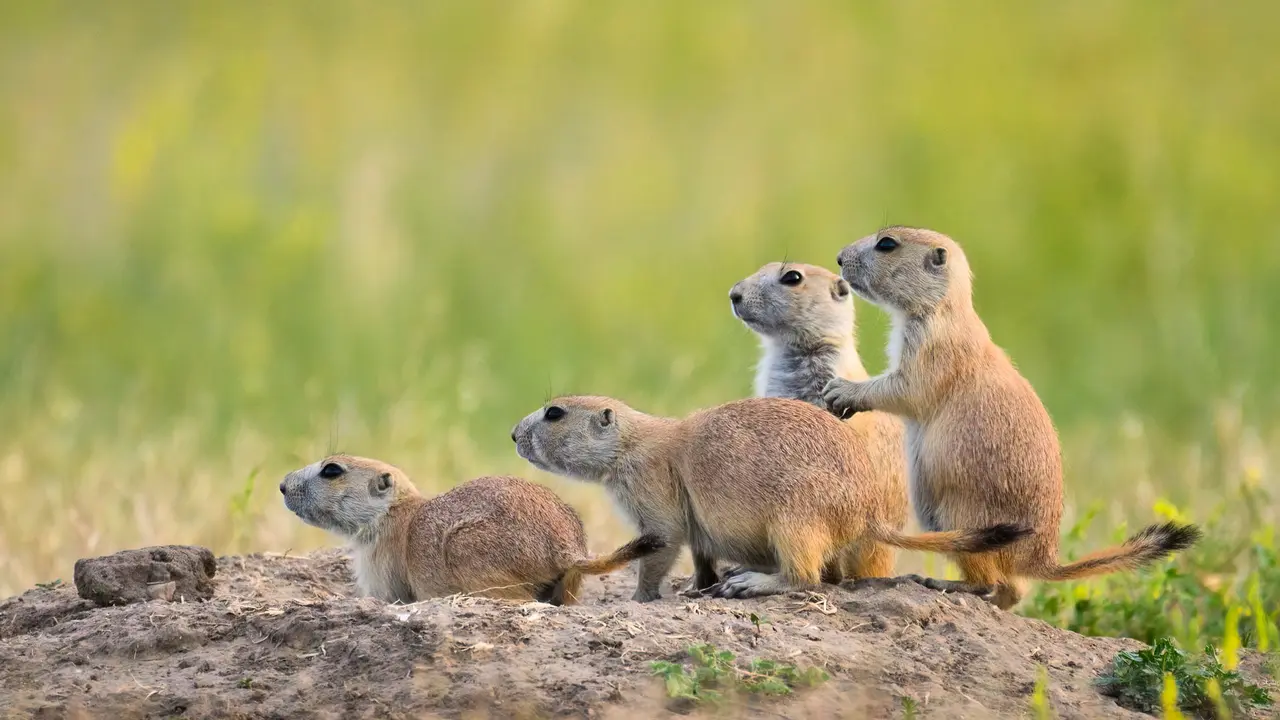
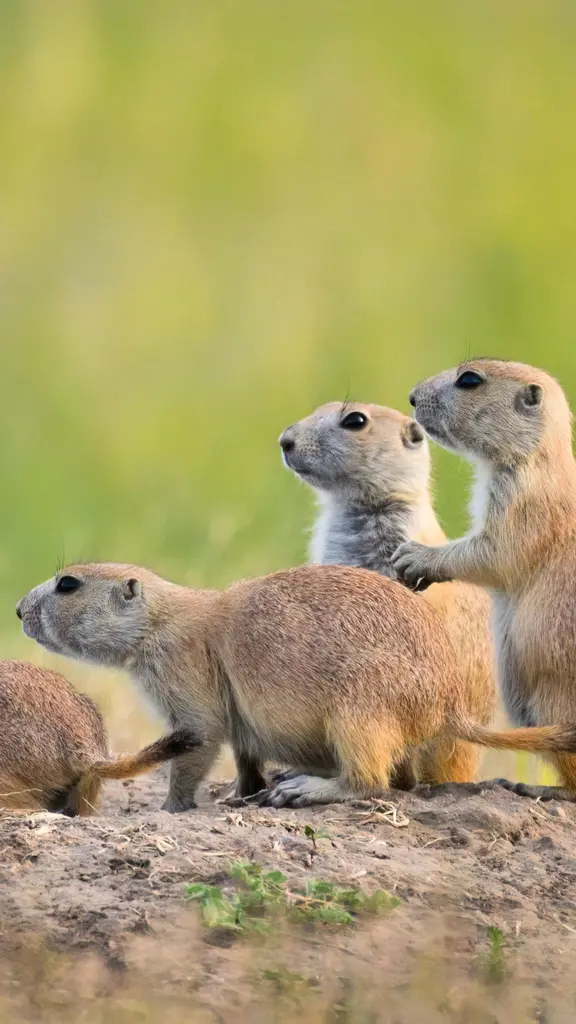
Black-tailed prairie dogs at Roberts Prairie Dog Town, Badlands National Park, South Dakota, United States (© Greg Vaughn/Getty Images)
On November 10, 47 years ago, a stark stretch of South Dakota prairie gained recognition as one of America's natural treasures. Badlands National Park, carved by wind and water, was redesignated from national monument to national park status in 1978, securing stronger protection within the United States' National Park System. Its cliffs and spires rise above fossil beds that reveal ancient rhinoceroses, camels and subtropical seas. Yet the park is not only a window into the past; it also safeguards one of the largest remaining tracts of mixed-grass prairie in the country.
The prairie hums with life. Bison roam the open range, bighorn sheep climb steep bluffs and prairie dogs build underground colonies, known as 'towns,' that can stretch for kilometres. Roberts Prairie Dog Town, where today's image was captured, is the park's largest accessible colony, supporting nearly 200 plant and animal species. Once labelled pests, prairie dogs are now recognised as keystone species, as they give rise to soil aeration and plant diversity. The park's anniversary marks its redesignation, but also reminds us that the Badlands endures not just as a rugged formation, but as a living and breathing prairie.