
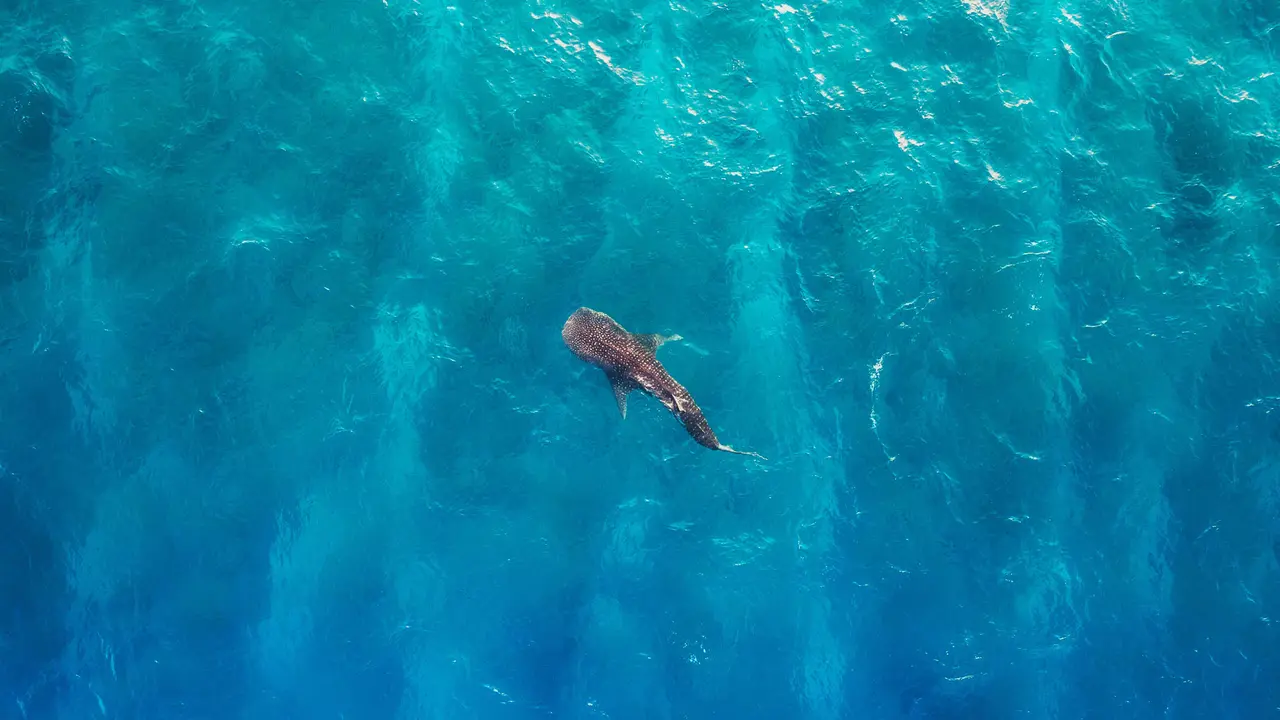
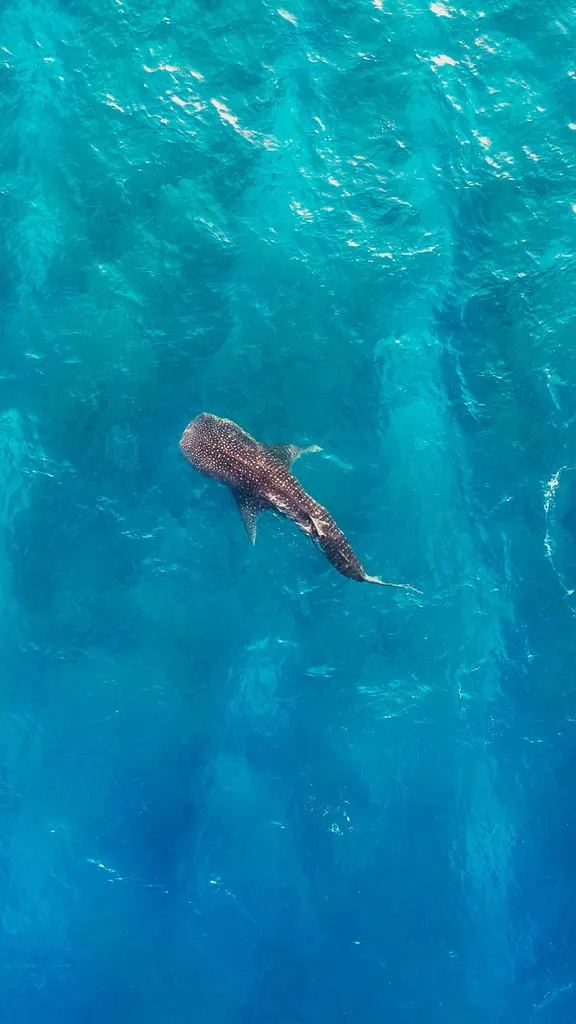
Whale shark off the coast of Alifu Dhaalu Atoll, Maldives (© Bachir Moukarzel/Amazing Aerial Agency)
If you've never seen a nearly 18-metre, polka-dotted fish gliding past coral reefs, you are missing out. Today is International Whale Shark Day, a reminder that these slow-motion giants need our attention. First observed in 2008, the day is used by researchers and marine advocates to spotlight conservation efforts and threats like vessel strikes, plastic pollution and unregulated tourism.
Whale sharks are the biggest fish in the sea, but don't let the word 'shark' fool you. They're plankton-eating giants with no interest in humans. Found in warm waters from the Maldives and Mozambique to Mexico's Yucatán coast, they often show up in food-rich, calm waters. Their mouths can stretch over 1.2 metres, but they feed by suction, not biting. Each has a unique pattern of white spots and stripes—no two alike—used by researchers to track individuals. Their breeding patterns remain largely a mystery, but they are ovoviviparous, meaning pups hatch inside the mother before being born alive. On a day like today, their story reminds us how much ocean life remains a mystery and how vital it is to protect what we already know is at risk.