
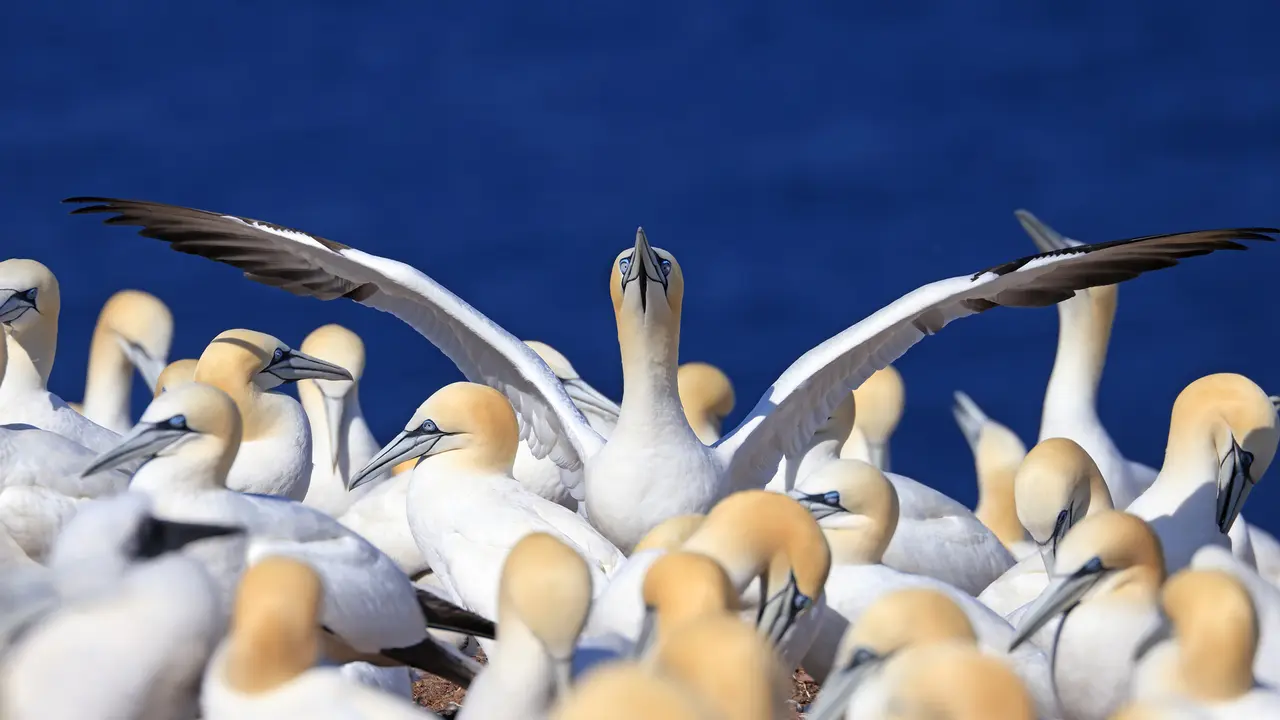
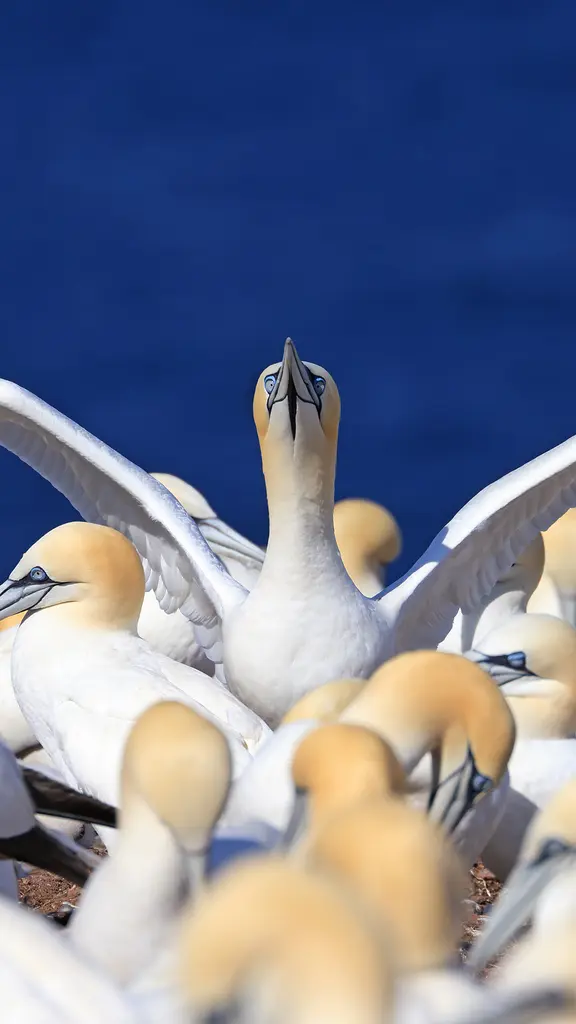
Colony of northern gannets, Quebec (© Vladone/Getty Images)
They are easy to recognise: sleek white bodies, black wingtips and a dagger-sharp bill. Northern gannets are anything but quiet—especially when gathered by the tens of thousands on Bonaventure Island's cliffs in Quebec. Each year, they come together to feed, breed and raise their young. These seabirds are high-speed hunters. Spotting fish from 70 metres up, they fold their wings and dive at speeds nearing 100 km/h. Air sacs in the skull protect them from the force of impact, allowing them to grab prey like herring, capelin and sand lance underwater with accuracy.
But it isn't just about fishing. Every April, adult gannets return to their old nesting spots, reuniting with mates through head-bobbing and beak-touching displays. Space is congested. Each nest is just a few centimetres from the next one, made from seaweed, plants, solid and marine debris. Incubation takes 42 to 46 days and hatching takes up to 36 hours, after which the chick is born featherless and hungry. Parents take turns feeding it until it is strong enough to fly. And when migration time comes, it heads south solo. It's a rough start—but these birds were made for the wild.