
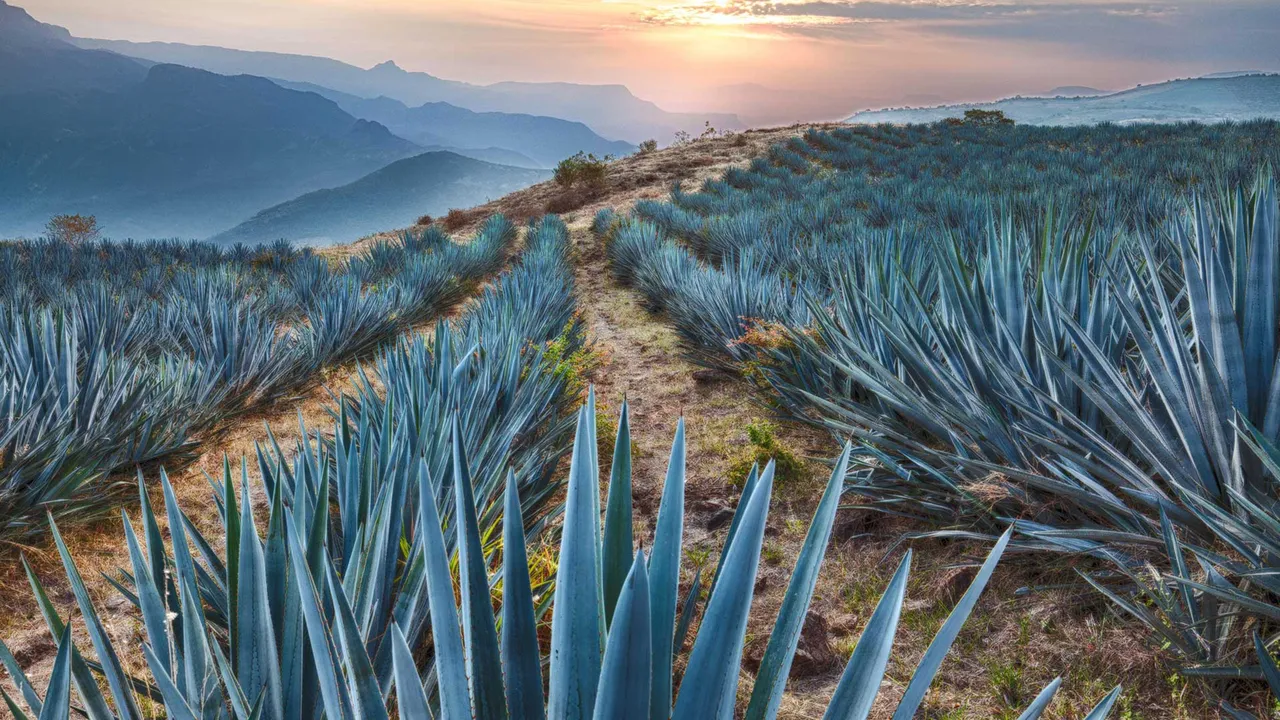
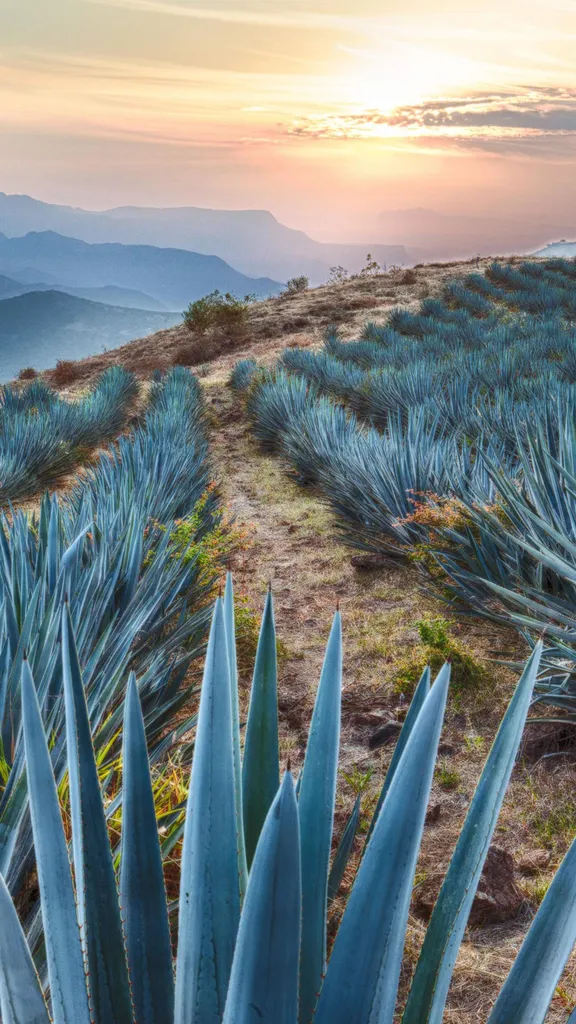
Field of blue agave near Tequila, Jalisco, Mexico (© Brian Overcast/Alamy)
In the highlands of Jalisco, Mexico, rows of blue agave stretch across the landscape, their spiky leaves catching the light like a field of sculpted stars. This region, centred around the town of Tequila, is the birthplace of tequila, a spirit deeply tied to both land and tradition.
Recognised by UNESCO in 2006 as a World Heritage Site, the agave landscape is more than farmland—it is a cultural map shaped over centuries. Blue agave has been cultivated here since the 16th century. Its slow-growing cores are harvested by skilled jimadores, who pass down techniques through generations. From field to distillery, each step reflects a balance of craft, patience and local knowledge.
The result is not just a drink, but a story rooted in soil and time. The volcanic terrain of Jalisco gives the agave its character, while traditional ovens, fermentation and distillation transform it into tequila. Together, they form a living heritage where agriculture and identity remain closely intertwined.