
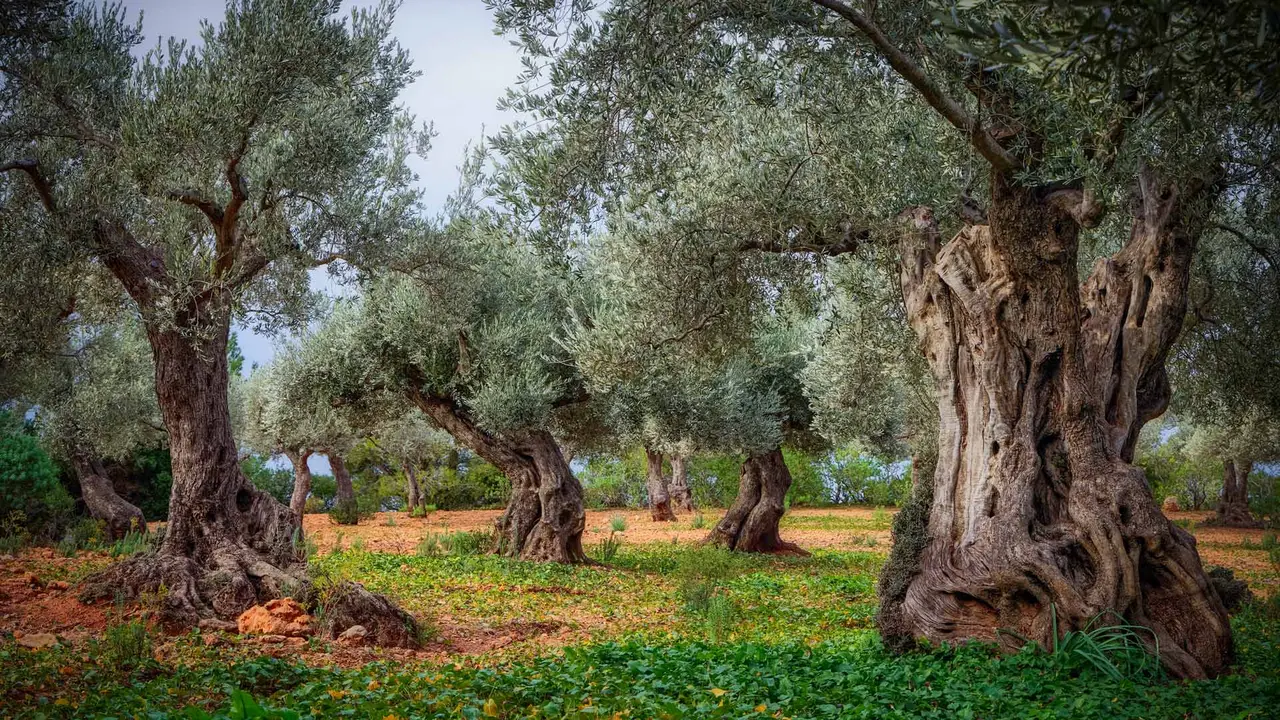
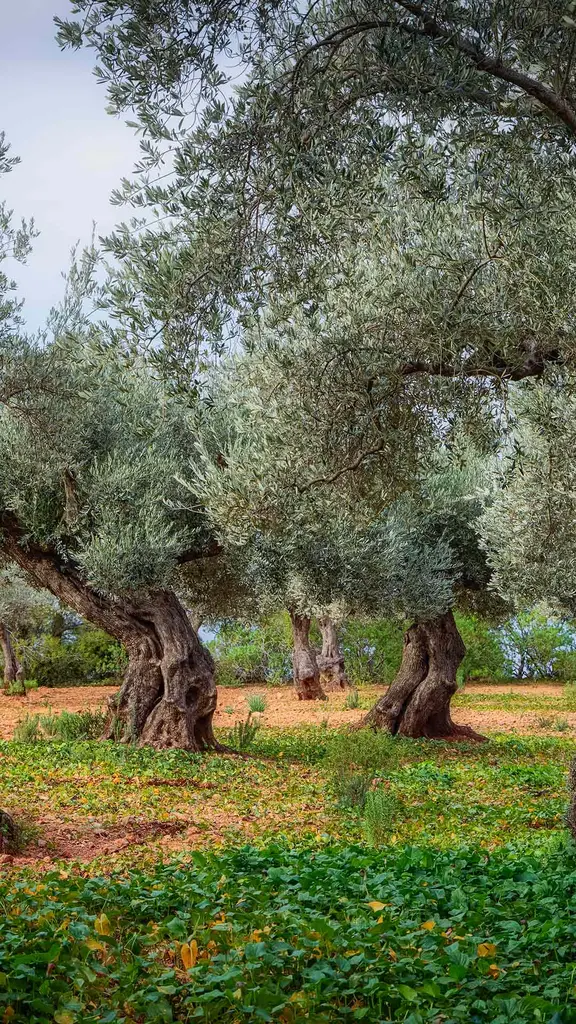
Olive orchard in the Serra de Tramuntana, Mallorca, Balearic Islands, Spain (© cinoby/Getty Images)
Ancient yet vibrant, twisted yet resilient, olive trees can live for over a thousand years. Even when scarred or hollowed, their trunks still send out fresh leaves each season—a living record of survival through drought, wind and fire. Olives have carried both practical and symbolic weight through the ages: their oil was pressed for anointing, medicine and daily sustenance; crowns of their leaves graced Olympic victors; and their branches became a lasting emblem of peace.
Nestled in the Balearic Sea, the Spanish island of Mallorca embodies this long story, flourishing with groves like those in the Serra de Tramuntana, photographed here. Some trees across the island are older than its medieval cathedrals. Here, olives are gently picked, pressed within hours and transformed into an oil prized for its fruity, almond and herbal notes. Each harvest continues a legacy: the fruit nourishes, the wood fuels fires and the roots stabilise steep slopes. Across millennia, these companions of civilisation have witnessed our progress as we witness their endurance—remaining unyielding, persistent and remarkably green.