
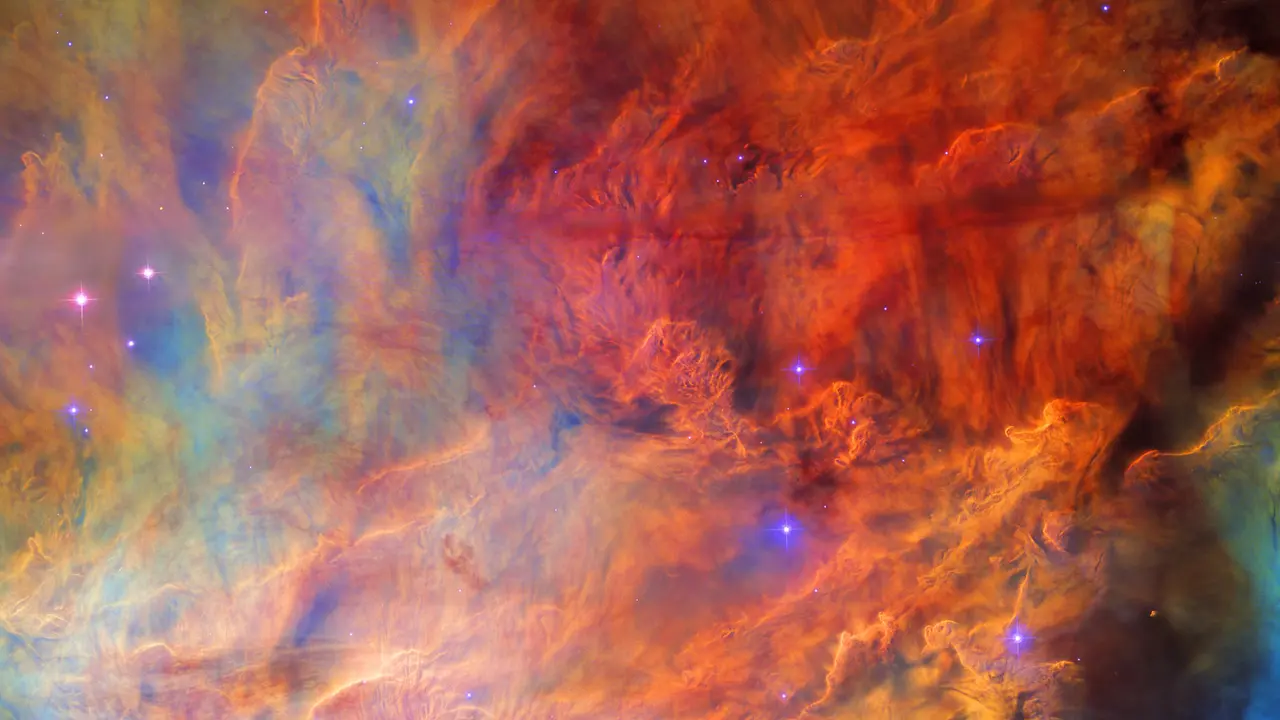
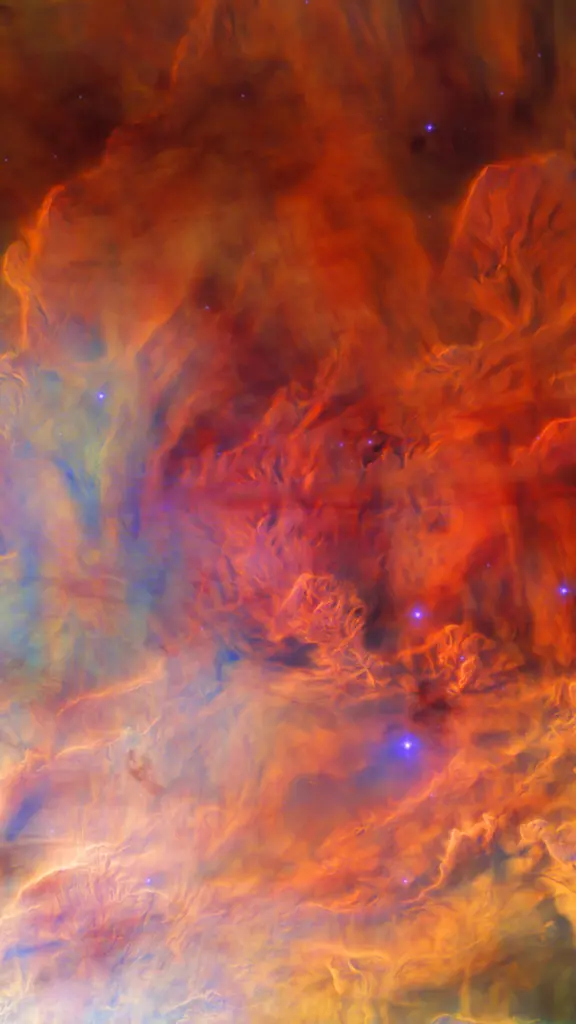
Interstellar clouds in the Lagoon Nebula, captured by the Hubble Space Telescope (© ESA/NASA)
The universe hums with creation. Featured here, in the Lagoon Nebula, a cluster called NGC 6530 is kindling newborn stars, a glowing reminder that beginnings are woven into the fabric of the cosmos. About 4,350 light-years away and a few million years old, it is a stellar formation still in its earliest chapter. Despite its immense distance, it glimmers faintly in the night sky, one of only two star-forming nebulae visible to the naked eye from mid-northern latitudes, alongside the famous Orion Nebula. First recorded by Giovanni Hodierna in 1654, it is located in the constellation Sagittarius. In long-exposure photographs, the Lagoon Nebula may appear pink, but when viewed through a telescope it looks grey, as the human eye struggles to detect colour in low-light conditions. So, if you ever try to spot it, don't be surprised by its muted appearance.