
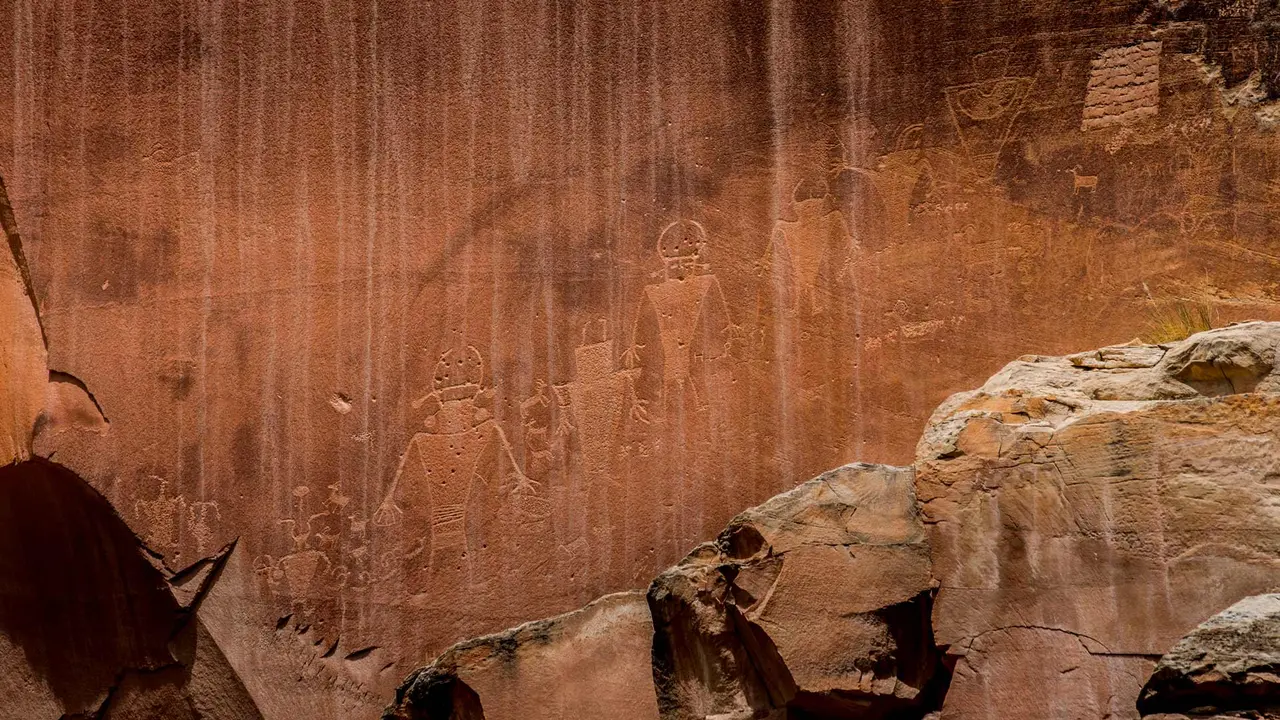
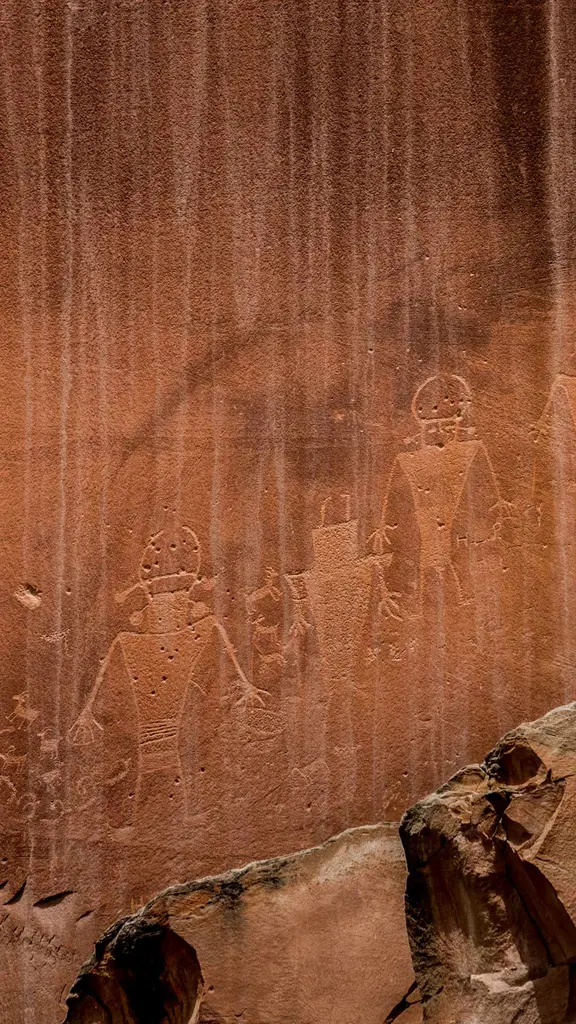
Petroglyphs near Fruita in Capitol Reef National Park, Utah, United States (© Nicolas VINCENT/Adobe Stock)
There's something timeless about Capitol Reef National Park—a place where red rock cliffs, winding canyons and ancient stories come together under Utah's desert sky. Designated a national park in 1971, Capitol Reef invites reflection—not just on its vivid geology, but on the ancient narratives and cultural heritage etched into its landscape.
Long before visitors laced up hiking boots and hit the trails at Capitol Reef, the Fremont and Ancestral Puebloan peoples called this place home. Between 300 and 1300 CE, they lived in pit houses and natural rock shelters, weaving farming into their hunter-gatherer lifestyle. Their connection to the land was both spiritual and practical—and they left behind some of the park's most captivating features, including petroglyphs like those found in Fruita, featured in today's image. These rock panels showcase an ancient visual language, featuring human figures adorned with headdresses and jewellery. Alongside them are animals like bighorn sheep and lizards, as well as abstract shapes alluding to ceremonies, migrations and celestial events. Together, they form a silent archive—a timeless record of the people who lived, moved and made meaning in this extraordinary landscape.