
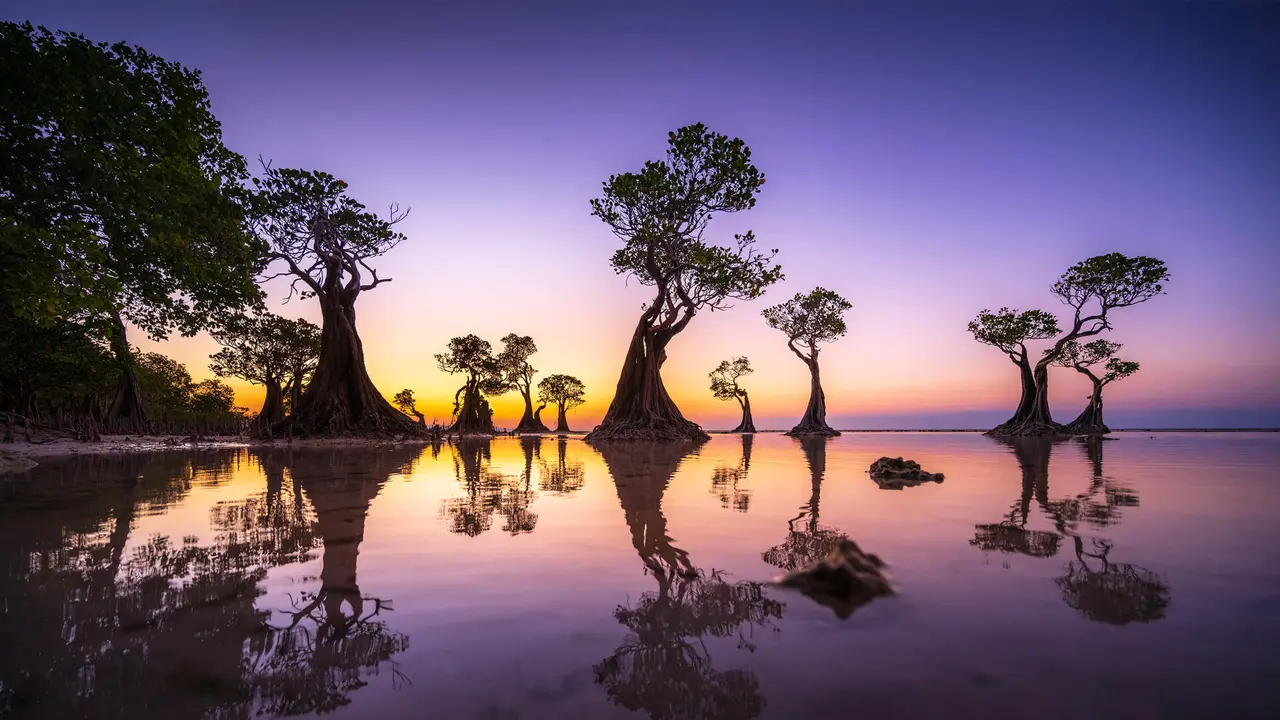
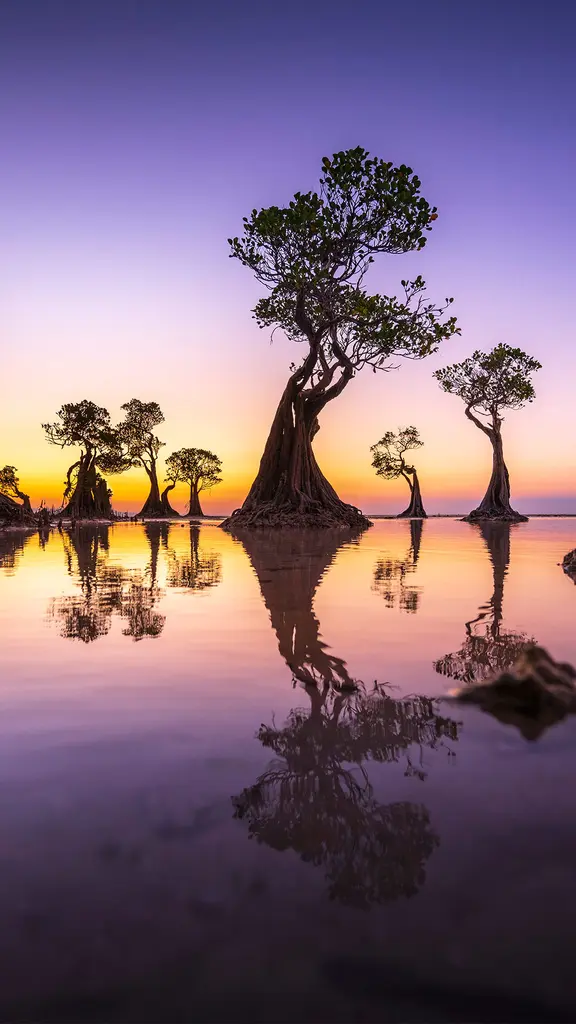
Mangrove trees at twilight, Walakiri Beach, island of Sumba, Indonesia (© Boonchet Ch./Getty Images)
As twilight descends on Walakiri Beach on the island of Sumba, Indonesia, the silhouettes of mangrove trees stand like sentinels in the tide—graceful, resilient and vital. Mangroves are nature's coastal guardians. With their arching and salt-filtering roots, they thrive where few trees can—anchored in brackish water, enduring tides and shifting sands. They protect shorelines from erosion, buffer communities against storms and serve as nurseries for countless marine animals. Their tangled root systems not only stabilise sediment but also provide shelter for juvenile fish, crabs and birds.
Mangroves also trap carbon at rates far higher than most forests, making them powerful allies in the fight against climate change. Yet they are disappearing at an alarming rate due to development, pollution and rising sea levels. Whether through education, restoration or advocacy, we all have a role in preserving these vital ecosystems. Because when we protect mangroves, we protect the future.