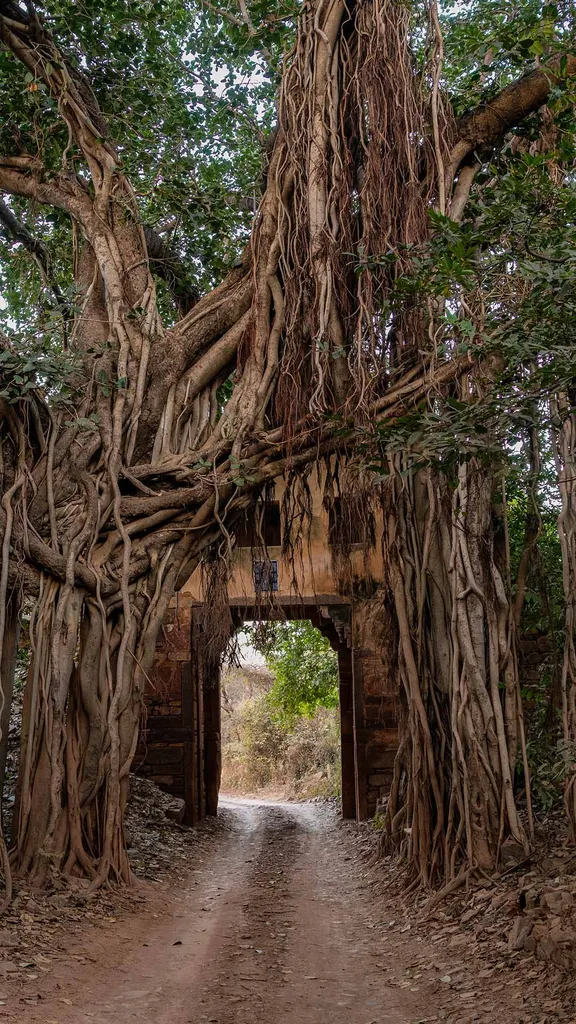
Indian banyan tree on ruin, Rajasthan, India
Deep within Ranthambore National Park, Indian banyan trees take root. Let other trees grow from the ground up; banyan seeds sprout on branches, buildings or ruins, dropped by passing birds. Once there, their aerial roots descend to the ground, slowly thickening into branch-supporting trunks. This allows the fig trees to spread over vast areas, providing fruit and shelter for wildlife, and welcome shade for people.
In today's image, a banyan tree is enveloping a stone arch, one of many ruins scattered around the park in Rajasthan, in north-west India, some dating back to the 10th century. While humans built them, banyan roots – and the tigers that frequent these ruins – are helping nature slowly reclaim them, absorbing them back into the forest.