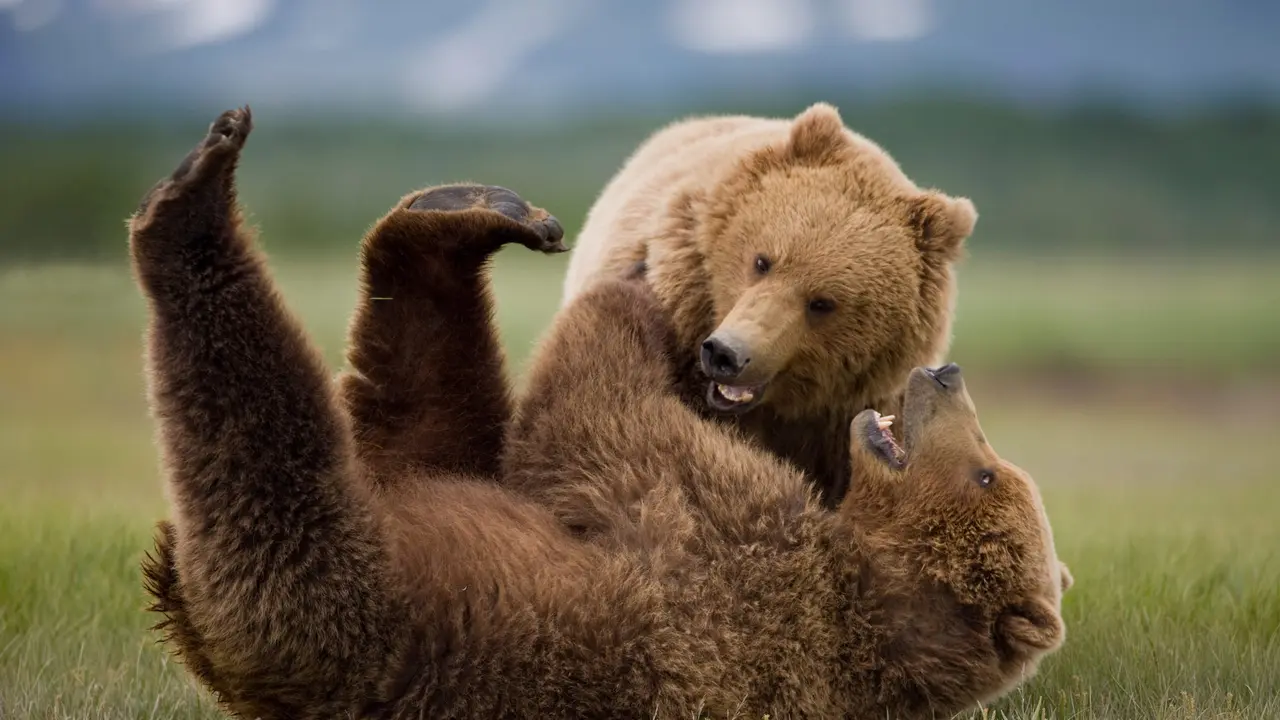
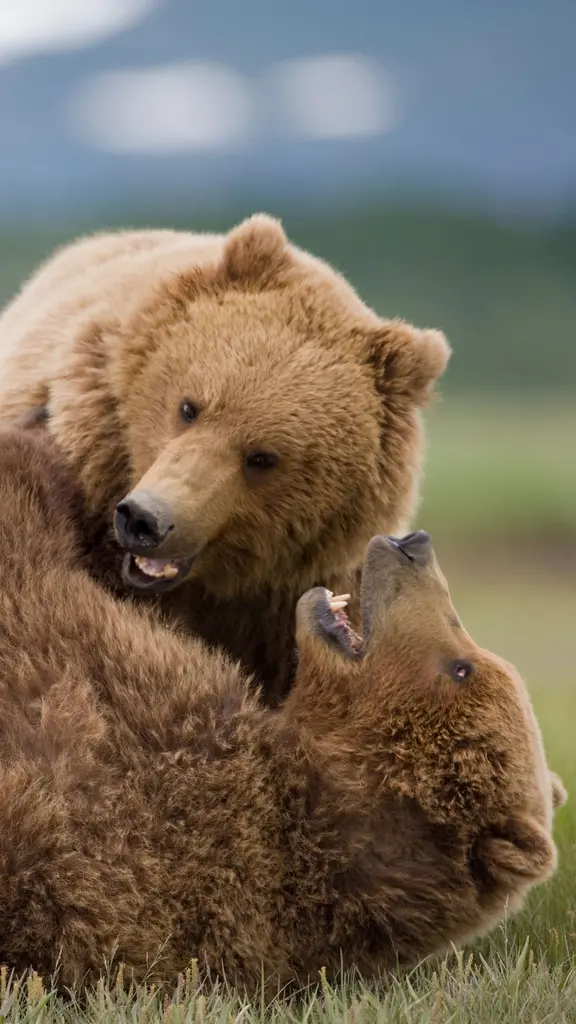
Grizzly bears at Katmai National Park and Preserve, Alaska, United States
A grizzly bear's sense of smell is so powerful, it can detect food from up to 32 kilometres away—seven times better than a bloodhound's.
Established in 1918 to preserve the aftermath of the Novarupta eruption, Katmai National Park and Preserve in southern Alaska, United States, spans over 16,500 square kilometres of raw wilderness. It is home to the alpine tundra, boreal forests and salmon-rich rivers that support brown bears, moose, wolves and hundreds of bird species, including the rare Aleutian tern. Also residing here is one of the most iconic symbols of the North American wilderness—the grizzly bear. Don't be fooled by their shaggy coats and lumbering walk—these predators can weigh up to 410 kilograms and still run at 56 km/h. Young grizzlies often 'play-fight' to build strength, sharpen survival skills and figure out their place in bear society. It may look cute, but it's serious practice for life in the wild.
In Canada, grizzlies are mainly found in British Columbia, Alberta, the Yukon and parts of the Northwest Territories. While coastal bears grow larger, those in Canada's northern interior are much smaller—males average 139 kilograms and females around 95 kilograms, similar in size to the American black bears in the same region. Whether in Alaska or Canada, grizzly bears remain one of the most formidable mammals in the wild.